Skip to content
Save 5% on your next order with code PREMIUM5!
100,000+ Products for Home, Medical, Office & Classroom Needs
Search
Skip to product information
1 of 1

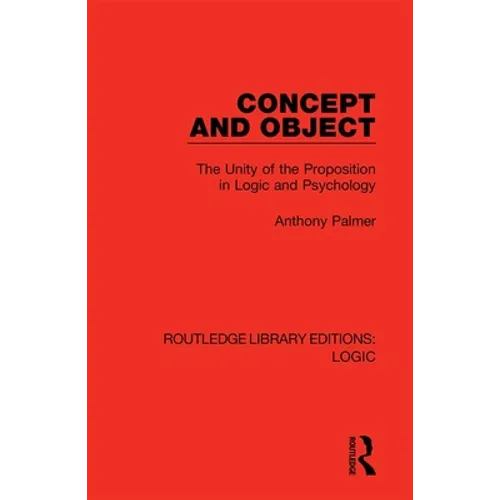
Concept and Object: The Unity of the Proposition in Logic and Psychology - Paperback

$77.74 USD
$77.74 USD
Sale Sold out
Shipping calculated at checkout.
In stock (100 units), ready to be shipped

Available Offers

Fast delivery available on most orders

Multiple secure payment options accepted

Secure checkout with
  • American Express
  • Apple Pay
  • Diners Club
  • Discover
  • Google Pay
  • Mastercard
  • PayPal
  • Shop Pay
  • Visa

Flight Range: Up to 1,000 meters (3,280 feet)

Maximum Speed: 45 kilometers per hour (28 miles per hour)

For all orders exceeding a value of 100USD shipping is offered for free.

Returns will be accepted for up to 10 days of Customer’s receipt or tracking number on unworn items. You, as a Customer, are obliged to inform us via email before you return the item.

Otherwise, standard shipping charges apply. Check out our delivery Terms & Conditions for more details.

View Product Details
Shopping cart
Product Product subtotal Quantity Price Product subtotal
Concept and Object: The Unity of the Proposition in Logic and Psychology - Paperback
$77.74/ea
$0.00
$77.74/ea $0.00

Product Description

by Anthony Palmer (Author)

Originally published in 1988. This text gives a lucid account of the most distinctive and influential responses by twentieth century philosophers to the problem of the unity of the proposition. The problem first became central to twentieth-century philosophy as a result of the depsychoiogising of logic brought about by Bradley and Frege who, responding to the 'Psychologism' of Mill and Hume, drew a sharp distinction between the province of psychology and the province of logic.


This author argues that while Russell, Ryle and Davidson, each in different ways, attempted a theoretical solution, Frege and Wittgenstein (both in the Tractatus and the Investigations) rightly maintained that no theoretical solution is possible. It is this which explains the importance Wittgenstein attached in his later work to the idea of agreement in judgments. The two final chapters illustrate the way in which a response to the problem affects the way in which we think about the nature of the mind. They contain a discussion of Strawson's concept of a person and provide a striking critique of the philosophical claims made by devotees of artificial intelligence, in particular those made by Daniel Dennett.


Number of Pages: 158
Dimensions: 0.5 x 8.4 x 5.5 IN
Publication Date: February 01, 2021
you might like