


Product Description
Commercial -60°C Laboratory Vacuum Freeze Dryer with Pre-Cooling
Designed for laboratory and commercial freeze-drying applications, this -60°C laboratory vacuum freeze dryer combines pre-freezing, vacuum drying, touchscreen operation, and a dedicated freeze-drying structure in one system.
Freeze drying, also called lyophilization, is a process that removes moisture from a previously frozen material under reduced pressure. The supplied product imagery highlights a number of features intended to support controlled laboratory processing, including a pre-freeze function, touchscreen interface, transparent Plexiglass cover, material-loading system, and multiple components.
The system is designed for applications where controlled low-temperature processing and vacuum drying are required. Always follow the manufacturer's operating instructions, laboratory procedures, and safety requirements for the material being processed.
View the Commercial -60°C Laboratory Vacuum Freeze Dryer at Smart Supply Deals

Practical Material Loading for Laboratory Processing
Proper material loading is an important part of any freeze-drying workflow. The supplied product image demonstrates the intended material-loading method for this laboratory freeze dryer.
Before operating the equipment, materials should be prepared and distributed according to the manufacturer's recommended loading procedure. Consistent loading can help maintain an organized workflow and provide appropriate exposure during the drying cycle.
Loading Considerations
- Prepare materials according to the intended process.
- Use suitable containers or trays.
- Distribute material appropriately across the available area.
- Avoid exceeding the manufacturer's stated capacity.
- Follow the recommended loading sequence.
- Keep the equipment clean between processing cycles.

Versatile Freeze-Drying Applications
Vacuum freeze drying can be used across a variety of laboratory, research, development, preservation, and processing workflows. The supplied applications image highlights the intended versatility of this equipment.
Depending on the material and process requirements, freeze drying may be used to reduce moisture while helping preserve important characteristics of a processed sample.
Potential Application Areas
- Laboratory research
- Sample preparation
- Material preservation
- Product development
- Research and development workflows
- Controlled low-temperature drying processes
Specific applications should always be evaluated for compatibility with the equipment and the material being processed.

Components Designed Around the Freeze-Drying Workflow
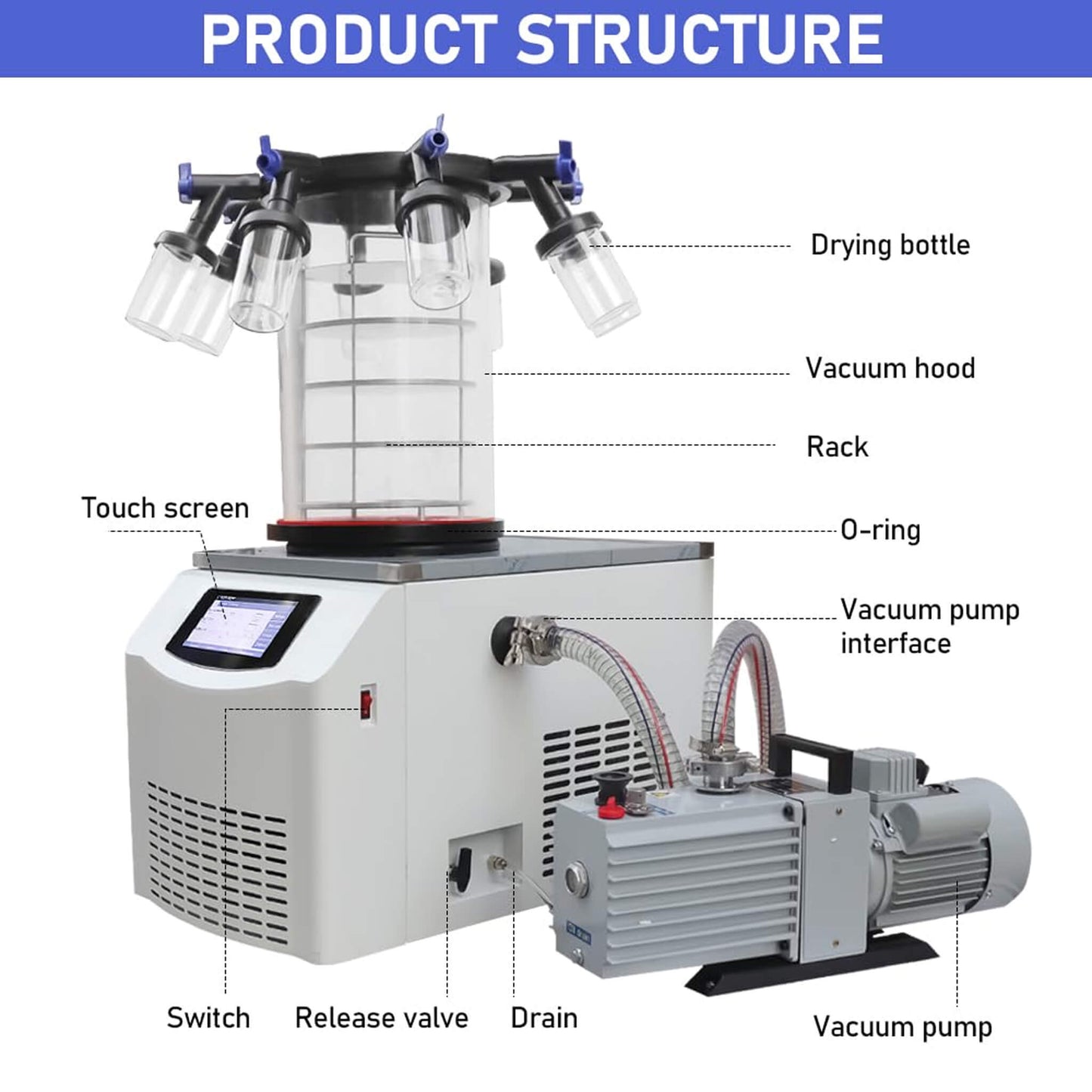
A laboratory freeze dryer consists of multiple interconnected components that work together during the freezing, vacuum, and drying stages.
The supplied image highlights additional components included in the equipment setup. Understanding each component and its function is important before beginning laboratory operation.
Equipment Organization
- Identify components before installation.
- Review all supplied operating instructions.
- Keep connection points clean.
- Inspect components before each use.
- Follow recommended maintenance procedures.

Integrated Laboratory Freeze-Drying System
The supplied component image provides a closer look at the equipment configuration. Each part contributes to the overall freeze-drying workflow, from preparation and freezing through vacuum drying.
For reliable operation, users should become familiar with the equipment layout before processing samples and should perform routine inspections as recommended by the manufacturer.
Before Operation
- Inspect the main unit and accessories.
- Check connections and fittings.
- Confirm the equipment is positioned appropriately.
- Review the selected process parameters.
- Verify that the material is compatible with the process.

Integrated Pre-Freeze Function
The system features a pre-freeze function, allowing material preparation to be incorporated into the freeze-drying workflow.
Pre-freezing is an important stage of lyophilization because the material must be frozen before moisture can be removed through sublimation under vacuum conditions.
Why Pre-Freezing Matters
- Prepares material for the drying stage.
- Forms the frozen state required for lyophilization.
- Helps establish an organized processing sequence.
- Can simplify workflows where freezing and drying are performed in one system.
Actual freezing temperatures, holding times, and process settings should be determined according to the material and manufacturer's operating recommendations.

Touchscreen Operation
The freeze dryer is equipped with a touchscreen interface, providing a dedicated control surface for interacting with the equipment.
A touchscreen interface can make it easier for laboratory users to view and manage available operating settings and monitor the equipment during a process.
Control Interface Benefits
- Touchscreen-based operation
- Centralized equipment controls
- Convenient access to operating settings
- Designed for laboratory workflow management
- Clear interface for equipment operation
Users should follow the supplied manual for the exact touchscreen functions, parameter ranges, alarms, and operating procedures.

Transparent Plexiglass Cover
The supplied product imagery shows a transparent Plexiglass cover incorporated into the freeze-drying setup.
A transparent cover allows users to visually inspect the relevant processing area while the equipment is being prepared or operated, subject to the manufacturer's operating procedures.
Practical Advantages
- Visible processing area
- Convenient visual inspection
- Transparent cover design
- Supports equipment monitoring
- Designed as part of the freeze-drying chamber arrangement

Purpose-Built Laboratory Structure
The structure image provides an overview of the freeze dryer's overall configuration and illustrates how the major sections of the system are arranged.
The equipment combines the freezing and vacuum-drying workflow with supporting components in a dedicated laboratory-oriented system.
System Characteristics
- -60°C temperature category
- Vacuum freeze-drying operation
- Pre-cooling / pre-freezing functionality
- Touchscreen interface
- Transparent Plexiglass cover
- Dedicated laboratory structure
How Vacuum Freeze Drying Works
Freeze drying generally involves three broad stages: freezing, primary drying, and secondary drying. The exact process depends on the material and the desired final characteristics.
1. Freezing
The material is first frozen. The supplied system includes a pre-freeze function to support this stage of the workflow.
2. Primary Drying
Under reduced pressure, frozen water can transition from ice to vapor through sublimation. This removes a significant portion of the moisture from the frozen material.
3. Secondary Drying
A subsequent drying stage may be used to reduce remaining moisture further, depending on the material and process requirements.
Exact cycle temperatures, vacuum levels, drying times, and other parameters must be established using validated procedures appropriate for the material being processed.
Laboratory and Commercial Freeze-Drying Applications
A laboratory vacuum freeze dryer can support research and processing workflows where controlled moisture removal is required. The supplied applications imagery is intended to demonstrate the equipment's broad application potential.
- Laboratory sample preparation
- Research and development
- Material preservation
- Product development
- Experimental drying processes
- Controlled low-temperature processing
- Commercial laboratory workflows
Always verify that the specific material, container, formulation, and process are appropriate for the freeze dryer before operation.
Suggested Freeze-Drying Workflow
Step 1 — Prepare the Material
Prepare the material according to your laboratory protocol and determine the appropriate loading method.
Step 2 — Pre-Freeze
Use the pre-freeze function where appropriate and establish the required frozen state before beginning vacuum drying.
Step 3 — Load the Material
Load trays, containers, or other approved materials according to the manufacturer's recommended procedure.
Step 4 — Establish the Drying Process
Configure the appropriate process parameters based on the material, validated laboratory procedure, and equipment specifications.
Step 5 — Monitor the Cycle
Use the touchscreen interface and available equipment indicators to monitor the process according to the operating manual.
Step 6 — Complete and Unload
Once the process has been completed according to the established procedure, carefully unload the processed material and clean the equipment as required.
Laboratory Safety & Operating Considerations
This is laboratory equipment intended for controlled professional use. Operators should be appropriately trained and should follow the manufacturer's instructions and applicable laboratory safety procedures.
- Read the complete operating manual before use.
- Use the equipment only for compatible materials.
- Do not exceed the manufacturer's specified capacity.
- Inspect connections and components before operation.
- Use appropriate laboratory personal protective equipment.
- Follow applicable vacuum-equipment safety procedures.
- Do not open or service the equipment while it is operating unless the manufacturer specifically permits it.
- Follow proper procedures for pressure and vacuum release.
- Keep the equipment clean and maintained.
- Only trained personnel should operate or service the system.
Cleaning & Maintenance
Regular inspection and maintenance are important for laboratory freeze-drying equipment. Cleaning procedures should be compatible with the machine's materials and the manufacturer's instructions.
- Clean the material-contact areas after appropriate use.
- Inspect seals and connections regularly.
- Keep the transparent cover clean and free of damaging chemicals.
- Check vacuum-related components according to the maintenance schedule.
- Inspect electrical and control components for abnormalities.
- Keep the equipment exterior clean and dry.
- Follow the manufacturer's recommended service intervals.
Commercial -60°C Laboratory Vacuum Freeze Dryer Specifications
| Feature | Details |
|---|---|
| Product | Commercial -60°C Laboratory Vacuum Freeze Dryer with Pre-Cooling |
| Product Type | Laboratory Vacuum Freeze Dryer |
| Temperature Category | -60°C |
| Pre-Freeze Function | Yes, highlighted in supplied product imagery |
| Pre-Cooling | Included as part of the product design |
| Control Interface | Touchscreen |
| Cover | Transparent Plexiglass Cover |
| Operation | Vacuum Freeze Drying / Lyophilization |
| Loading | Dedicated Material Loading Method |
| Construction | Laboratory Freeze-Dryer Structure with Multiple Components |
| Reference | SAK74152 |
What to Consider When Choosing a Laboratory Freeze Dryer
Temperature Requirements
Consider the minimum temperature required for your materials and process. This product is presented in the -60°C temperature category.
Material Capacity
Determine how much material you need to process per cycle and confirm that the equipment's actual capacity meets your laboratory requirements.
Pre-Freezing Requirements
If your workflow requires integrated freezing, consider whether the equipment's pre-freeze or pre-cooling functionality matches your process.
Control System
A touchscreen interface can provide convenient access to available operating controls and process settings.
Material Compatibility
Always verify compatibility between the material, containers, temperatures, vacuum conditions, and all surfaces that may come into contact with the sample.
Common Freeze-Drying Mistakes to Avoid
- Loading more material than the equipment is designed to handle.
- Using an unsuitable container or loading configuration.
- Beginning vacuum drying before the material is appropriately frozen.
- Using process parameters without considering material requirements.
- Failing to inspect seals and connections.
- Ignoring the manufacturer's maintenance schedule.
- Opening the equipment improperly while under vacuum.
- Using the system without appropriate laboratory training.
- Failing to document validated process parameters.
Professional Freeze-Drying Equipment for Laboratory Workflows
The Commercial -60°C Laboratory Vacuum Freeze Dryer with Pre-Cooling is designed around controlled freeze-drying workflows and includes features such as a pre-freeze function, touchscreen operation, transparent Plexiglass cover, dedicated material loading, and multiple supporting components.
Whether used for research, sample preparation, preservation, product development, or other compatible laboratory applications, the system provides a dedicated platform for vacuum freeze drying at low temperatures.
View the Commercial -60°C Laboratory Vacuum Freeze Dryer at Smart Supply Deals
Frequently Asked Questions
Explore More Laboratory & Commercial Equipment
Discover laboratory equipment, commercial processing solutions, research tools, and other professional products at Smart Supply Deals.