


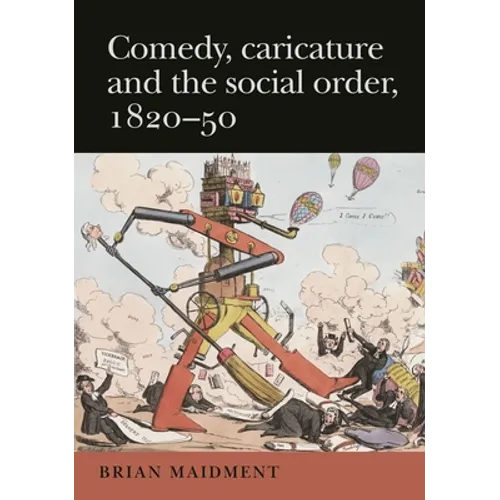
Product Description
by Brian Maidment (Author)
In offering an overview of the market for comic images between 1820 and 1850, this book makes a case for the importance of a largely neglected area of visual culture. It draws on a wide range of commercially produced print genres, including song books, play-texts, comic annuals and magazines as well as single plate and series of caricatures.
Front Jacket
Offering an overview of the market place for comic images between 1820 and 1850, this considers the impact on the development of print culture of the emergent, but soon widespread, use of lithography and wood engraving. Drawing on a wide range of commercially produced print genres, including song books, play-texts, comic annuals and magazines as well as single plate and series of caricatures, this book traces the ways in which Regency and early Victorian visual humour both sustains some of the characteristics of an earlier caricature tradition while also beginning to develop new ways of analyzing and coping with social change through comic forms and genres. Beginning with an overview of the range of media, modes and genres that artists, engravers, publishers and entrepreneurs of print culture used in pursuit of wide readerships, the book discusses contemporary theories of humour in some detail and challenges the generally condescending response that art and social historians have offered to such material. The second half of the book is built upon four detailed case studies of related groups of images produced in the period, through which the broader arguments made in the first half of the book are subjected to more thorough scrutiny. The book is aimed at a broad range of scholars and students across art history, social history, cultural studies and literature.
Back Jacket
Offering an overview of the market place for comic images between 1820 and 1850, this considers the impact on the development of print culture of the emergent, but soon widespread, use of lithography and wood engraving. Drawing on a wide range of commercially produced print genres, including song books, play-texts, comic annuals and magazines as well as single plate and series of caricatures, this book traces the ways in which Regency and early Victorian visual humour both sustains some of the characteristics of an earlier caricature tradition while also beginning to develop new ways of analyzing and coping with social change through comic forms and genres.
Beginning with an overview of the range of media, modes and genres that artists, engravers, publishers and entrepreneurs of print culture used in pursuit of wide readerships, the book discusses contemporary theories of humour in some detail and challenges the generally condescending response that art and social historians have offered to such material. The second half of the book is built upon four detailed case studies of related groups of images produced in the period, through which the broader arguments made in the first half of the book are subjected to more thorough scrutiny.
The book is aimed at a broad range of scholars and students across art history, social history, cultural studies and literature.
Author Biography
Brian Maidment is Professor of the History of Print Culture in the English Department at Liverpool John Moores University