Product Description
by Faber Birren (Author)
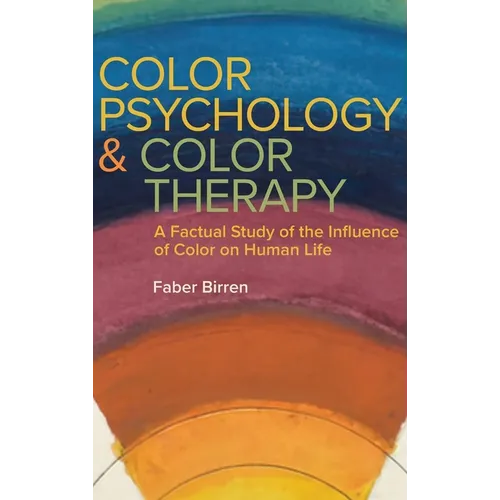
Color Psychology and Color Therapy: A Factual Study of the Influence of Color on Human Life (1950) is a book of color theory by renowned color expert Faber Birren. The work explores the impact of color on human behavior and emotions.
Born in 1900 in Chicago, Illinois, Birren began studying color and art as a teen at the Art Institute of Chicago. While he originally intended to follow in his father's footsteps as a landscape painter, he determined that he didn't have the requisite talent.
He attended the University of Chicago as an education major instead, but found that his interest was still in the world of color. Since no formal program in color theory existed at the time, he left school to pursue a course of self-managed study, spending hours at the Chicago Public Library.
At age 24, Birren began a prolific writing career, publishing dozens of books and articles on color theory over the course of his life. Soon, he began consulting for businesses, claiming he could boost sales with the careful use of color.
One of Birren's early successes was a Chicago wholesale meat company. He suggested that the white walls of the meat coolers made the meat appear an unappetizing gray color. He proposed that the meat company paint the coolers in a blue-green color instead, to make the meat's red hue pop. Sales increased, and Birren had proven that paying attention to color theory could reap dividends.
Birren brought this expertise to many well-known corporations throughout the middle of the 20th century. He consulted with major manufacturers like Monsanto, General Electric, and DuPont, among others. His goals went beyond sales, aiming to improve employee mood and attentiveness as well. He even consulted with Disney on the color choices in the films Bambi, Fantasia, and Pinocchio.
Color Psychology and Color Therapy is written in four parts. In part one, Birren discusses color symbolism in varied mystic, occultist, and religious traditions. He also shares the views on color expressed by various ancient philosophers.
In part two, Birren takes a scientific approach to color. He explores the electromagnetic spectrum and the effects of certain wavelengths of light and color on plants, animals, and the human body.
In part three, Birren turns his attention to the psychological impacts of color on human behavior and emotions. Unsurprisingly, the impact of color on mood and behavior is far more complex than "red makes us happy" and "gray makes us sad." It is a complex blend of context, personal associations, and subjective impressions, which Birren explores in depth.
Finally, part four focuses on the visual aspects of color, like the function of the eye and how it perceives different colors. Through a deliberate use of color, Birren argues that we can reduce eye strain and fatigue, and improve efficiency and safety. He also explores visual difficulties, like color blindness and night blindness, their causes, and their effects.
Birren's contributions to the field of color theory are still seen today. Colorful safety margins painted around factory equipment and purple-topped pool tables (instead of the traditional green) are both among his many legacies.