


Product Description
by Martina Sprague (Author)
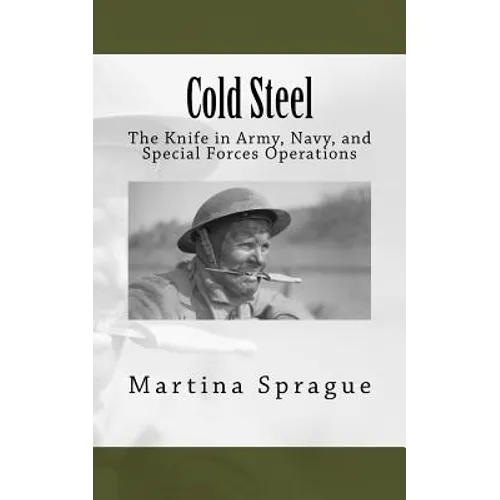
Knives have been carried with enthusiasm as sidearms to swords since antiquity, and as sidearms to firearms into modern day. Knife combat involves strategy (the planning behind an attack which allows the soldier to reach a combat objective) and tactics (the actual use of the knife, for example, to dispose of an enemy in trench warfare or to kill a sentry at night). Historically serving several missions, the knife has proven a good infiltration weapon when silence must be preserved. It has been used for killing sentries, and has come in handy in close quarters on the large battlefield; for example, in foxholes where firearms or grenades would have been impractical. Soldiers recognized early the benefits of carrying a small and lightweight weapon that could be concealed on one's person, relied upon in the hand-to-hand fight, or deployed to finish an adversary at close range when one's firearm malfunctioned.Although soldiers carry knives for a variety of purposes-not all knives are designed strictly for fighting but also double as tools such as trench digger, ration opener, parachute line cutter, etc.-this book concerns itself primarily with the role the knife has played as a combat weapon in near modern and modern warfare in the western world. Combat can further be broken down into the use of the knife to kill an enemy including sentry killings and trench raids, and the psychological use of the knife as a weapon of coercion or to send the enemy to flight. The book begins with a discussion of knife design and carry, which purpose it is to familiarize the reader with the many factors the knife smith must consider when crafting the weapon. Next it demonstrates the important function the knife has served as a battlefield sidearm in the different military branches. It then examines the effectiveness of the knife and how soldiers have trained to prepare for the possibility of using cold steel against an enemy combatant. The concluding remarks focus on the knife as a weapon of inspiration.Knives, Swords, and Bayonets: A World History of Edged Weapon Warfare is a book series that examines the history of edged weapons in Europe, Asia, Africa, the Americas, and the Middle East and surrounding areas before gunpowder increased the distance between combatants. The book series takes a critical look at the relationship between the soldier, his weapon, and the social and political mores of the times. Each book examines the historical background and metallurgic science of the knife, sword, or bayonet respectively, and explores the handling characteristics and combat applications of each weapon. The individual books are excerpted from the previously published book, A History of Edged Weapon Warfare, also by Martina Sprague. Look for more books in this series in the near future.



