Product Description
by Gibans (Author), James D. Gibans (Author), Paul Goldberger (Foreword by)
Midcentury Modern domestic architecture in Northeast Ohio
"The definitive study of its subject."--Alice T. Friedman, Wellesley College
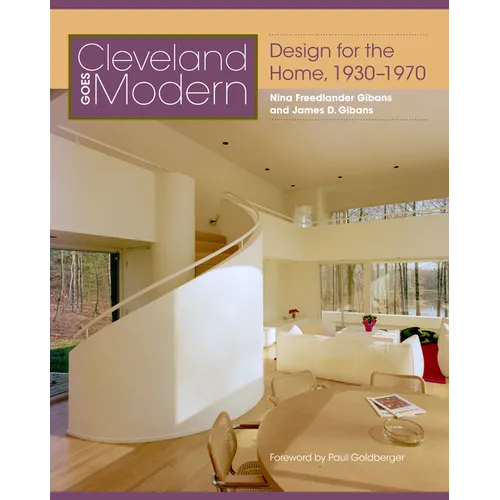
Based on the award-winning exhibition of the same name, Cleveland Goes Modern: Design for the Home, 1930-1970, examines Modern movement houses in greater Cleveland within the context of American Modernism as a whole. The authors demonstrate that understanding and contextualizing this regional domestic architecture, along with the practitioners and clients who created it, makes a valuable contribution to the larger study of architecture and the Modern period as well as of the region's architectural history.
Beautifully illustrated with more than 150 drawings and photographs in color and black-and-white, the book features the work of six architects: Don Hisaka, John Terence Kelly, Robert Little, William Morris, Ernst Payer, and Fred Toguchi. In their own words, the architects, clients, and restorers discuss the homes they created and preserved. Cleveland Goes Modern also documents other modernists who practiced during this period and the role they played. It examines how the modernist sensibility and tradition survives and thrives in national and local twenty-first-century architects. Functioning as both a historical overview and a gazetteer of significant examples, Cleveland Goes Modern makes a compelling case for preserving the works of architecture from the period.
Some of the homes featured in the book have been torn down since the project began; others may be altered or disappear in the future. Cleveland Goes Modern makes a lasting contribution to the study of architecture, one that will serve students and scholars of architectural history for generations after these singular structures no longer exist.
Author Biography
Nina Freedlander Gibans received her B.A. from Sarah Lawrence College and M.A. in Aesthetics and Art History from Case Western Reserve University. She has taught and written about the cultural scene since the 1950s and received the Cleveland Arts Prize Martha Joseph Citation in 2009. She has produced five videos and authored or edited five books. She was chief curator of Cleveland Goes Modern: Design for the Home 1930-1970, which won local and state awards and an invitation to AIA Headquarters in Washington, D.C., as part of their 150th anniversary celebration. James D. Gibans, FAIA, was a product of the midcentury Modern movement, graduating from Yale University with a B.A., B.Arch., and M.Arch in the mid-1950s. Following a Fulbright Grant for study in England and six years of architectural practice in the California Bay Area, he returned to Northeast Ohio to devote himself to his career, which spanned over 40 years. He was elected a Fellow of the American Institute of Architects in 2002.