Skip to content
Welcome To Our Store.
100,000+ Products for Home, Medical, Office & Classroom Needs
Search
Skip to product information
1 of 1

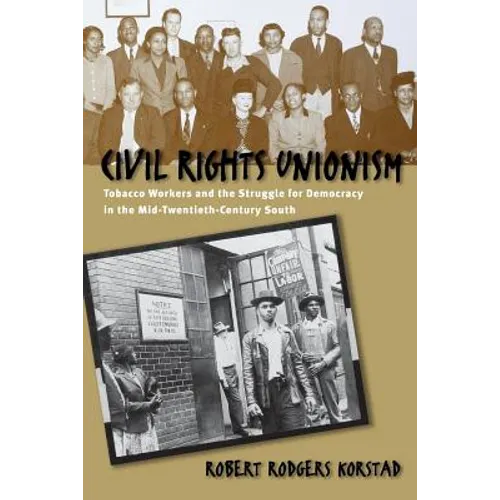
Civil Rights Unionism: Tobacco Workers and the Struggle for Democracy in the Mid-Twentieth-Century South - Paperback

$89.10 USD
$89.10 USD
Sale Sold out
Shipping calculated at checkout.
In stock (100 units), ready to be shipped

Available Offers

Fast delivery available on most orders

Multiple secure payment options accepted

Secure checkout with
  • American Express
  • Apple Pay
  • Diners Club
  • Discover
  • Google Pay
  • Mastercard
  • PayPal
  • Shop Pay
  • Visa

Flight Range: Up to 1,000 meters (3,280 feet)

Maximum Speed: 45 kilometers per hour (28 miles per hour)

For all orders exceeding a value of 100USD shipping is offered for free.

Returns will be accepted for up to 10 days of Customer’s receipt or tracking number on unworn items. You, as a Customer, are obliged to inform us via email before you return the item.

Otherwise, standard shipping charges apply. Check out our delivery Terms & Conditions for more details.

View Product Details
Shopping cart
Product Product subtotal Quantity Price Product subtotal
Civil Rights Unionism: Tobacco Workers and the Struggle for Democracy in the Mid-Twentieth-Century South - Paperback
$89.10/ea
$0.00
$89.10/ea $0.00

Product Description

by Robert R. Korstad (Author)

Drawing on scores of interviews with black and white tobacco workers in Winston-Salem, North Carolina, Robert Korstad brings to life the forgotten heroes of Local 22 of the Food, Tobacco, Agricultural and Allied Workers of America-CIO. These workers confronted a system of racial capitalism that consigned African Americans to the basest jobs in the industry, perpetuated low wages for all southerners, and shored up white supremacy.

Galvanized by the emergence of the CIO, African Americans took the lead in a campaign that saw a strong labor movement and the reenfranchisement of the southern poor as keys to reforming the South--and a reformed South as central to the survival and expansion of the New Deal. In the window of opportunity opened by World War II, they blurred the boundaries between home and work as they linked civil rights and labor rights in a bid for justice at work and in the public sphere.

But civil rights unionism foundered in the maelstrom of the Cold War. Its defeat undermined later efforts by civil rights activists to raise issues of economic equality to the moral high ground occupied by the fight against legalized segregation and, Korstad contends, constrains the prospects for justice and democracy today.


Number of Pages: 576
Dimensions: 1.37 x 9.08 x 6.42 IN
Publication Date: May 26, 2003
you might like
