Skip to content
Welcome To Our Store.
100,000+ Products for Home, Medical, Office & Classroom Needs
Search
Skip to product information
1 of 1

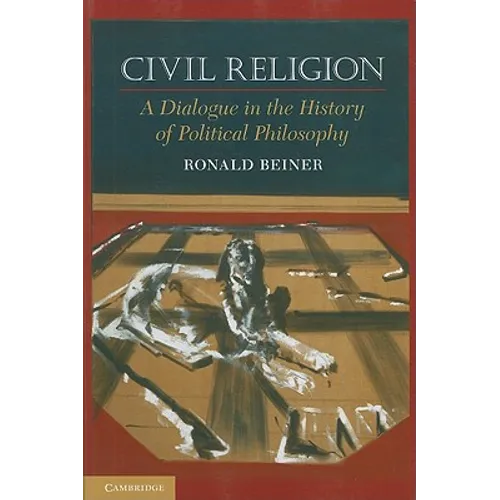
Civil Religion: A Dialogue in the History of Political Philosophy - Paperback

$64.26 USD
$64.26 USD
Sale Sold out
Shipping calculated at checkout.
In stock (100 units), ready to be shipped

Available Offers

Fast delivery available on most orders

Multiple secure payment options accepted

Secure checkout with
  • American Express
  • Apple Pay
  • Diners Club
  • Discover
  • Google Pay
  • Mastercard
  • PayPal
  • Shop Pay
  • Visa

Flight Range: Up to 1,000 meters (3,280 feet)

Maximum Speed: 45 kilometers per hour (28 miles per hour)

For all orders exceeding a value of 100USD shipping is offered for free.

Returns will be accepted for up to 10 days of Customer’s receipt or tracking number on unworn items. You, as a Customer, are obliged to inform us via email before you return the item.

Otherwise, standard shipping charges apply. Check out our delivery Terms & Conditions for more details.

View Product Details
Shopping cart
Product Product subtotal Quantity Price Product subtotal
Civil Religion: A Dialogue in the History of Political Philosophy - Paperback
$64.26/ea
$0.00
$64.26/ea $0.00

Product Description

by Ronald Beiner (Author)

Civil Religion offers philosophical commentaries on more than twenty thinkers stretching from the sixteenth to the twentieth century. The book examines four important traditions within the history of modern political philosophy and delves into how each of them addresses the problem of religion. Two of these traditions pursue projects of domesticating religion. The civil religion tradition, principally defined by Machiavelli, Hobbes, and Rousseau, seeks to domesticate religion by putting it solidly in the service of politics. The liberal tradition pursues an alternative strategy of domestication by seeking to put as much distance as possible between religion and politics. Modern theocracy is a militant reaction against liberalism, and it reverses the relationship of subordination asserted by civil religion: it puts politics directly in the service of religion. Finally, a fourth tradition is defined by Nietzsche and Heidegger. Aspects of their thought are not just modern, but hyper-modern, yet they manifest an often-hysterical reaction against liberalism that is fundamentally shared with the theocratic tradition. Together, these four traditions compose a vital dialogue that carries us to the heart of political philosophy itself.


Number of Pages: 450
Dimensions: 0.9 x 9.1 x 6.1 IN
Publication Date: October 25, 2010
you might like
