


Product Description
by Walter Simons (Author)
Selected by Choice magazine as an Outstanding Academic Title
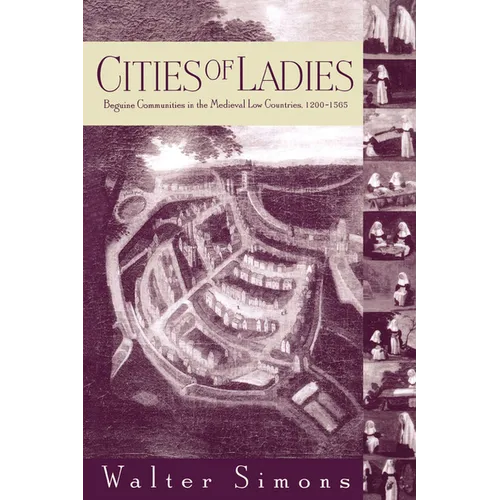
In the early thirteenth century, semireligious communities of women began to form in the cities and towns of the Low Countries. These beguines, as the women came to be known, led lives of contemplation and prayer and earned their livings as laborers or teachers. In Cities of Ladies, the first history of the beguines to appear in English in fifty years, Walter Simons traces the transformation of informal clusters of single women to large beguinages. These veritable single-sex cities offered lower- and middle-class women an alternative to both marriage and convent life. While the region's expanding urban economies initially valued the communities for their cheap labor supply, severe economic crises by the fourteenth century restricted women's opportunities for work. Church authorities had also grown less tolerant of religious experimentation, hailing as subversive some aspects of beguine mysticism. To Simons, however, such accusations of heresy against the beguines were largely generated from a profound anxiety about their intellectual ambitions and their claims to a chaste life outside the cloister. Under ecclesiastical and economic pressure, beguine communities dwindled in size and influence, surviving only by adopting a posture of restraint and submission to church authorities.Author Biography
Walter Simons is Associate Professor of History at Dartmouth College.
Number of Pages: 352
Dimensions: 1.05 x 9.36 x 6.12 IN
Illustrated: Yes
Publication Date: February 27, 2003



