


Product Description
by Jordan Cooper (Author)
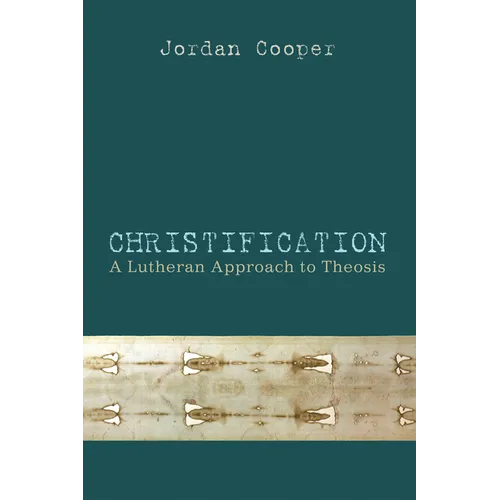
The doctrine of theosis has enjoyed a recent resurgence among varied theological traditions across the realms of historical, dogmatic, and exegetical theology. In Christification: A Lutheran Approach to Theosis, Jordan Cooper evaluates this teaching from a Lutheran perspective. He examines the teachings of the church fathers, the New Testament, and the Lutheran Confessional tradition in conversation with recent scholarship on theosis. Cooper proposes that the participationist soteriology of the early fathers expressed in terms of theosis is compatible with Luther's doctrine of forensic justification. The historic Lutheran tradition, Scripture, and the patristic sources do not limit soteriological discussions to legal terminology, but instead offer a multifaceted doctrine of salvation that encapsulates both participatory and forensic motifs. This is compared and contrasted with the development of the doctrine of deification in the Eastern tradition arising from the thought of Pseudo-Dionysius. Cooper argues that the doctrine of the earliest fathers--such as Irenaeus, Athanasius, and Justin--is primarily a Christological and economic reality defined as Christification. This model of theosis is placed in contradistinction to later Neoplatonic forms of deification. Cooper's work exhibits all the elements one would expect from a Lutheran scholar--a commitment to sola scriptura, a strong defense of a forensic notion of justification, and an emphasis on sacramentology--while at the same time incorporating a notion of theosis as Christification. Alongside other Protestant construals of theosis, Cooper's work makes a fine addition. --Myk Habets, Carey Baptist College, Auckland, New Zealand On the basis of a clear exposition of the Eastern Orthodox teaching on deification, with particular emphasis on the aspect of Christification, Jordan Cooper argues eloquently for its compatibility with Lutheran theology. Without obscuring the differences between the Orthodox and Lutheran approaches, he makes a valuable contribution to ecumenical theological dialogue and potentially to the renewal of the mystical tradition in the Western churches. --Norman Russell, St. Stephen's House, University of Oxford, Oxford, UK Jordan Cooper is the pastor of Hope Lutheran Church in Brighton, IA, host of the Just & Sinner podcast (visit http: //www.justandsinner.com), and the author of The Righteousness of One: An Evaluation of Early Patristic Soteriology in Light of the New Perspective on Paul (2013).
Author Biography
Jordan Cooper is the pastor of Hope Lutheran Church in Brighton, IA, host of the Just & Sinner podcast (visit http: //www.justandsinner.com), and the author of The Righteousness of One: An Evaluation of Early Patristic Soteriology in Light of the New Perspective on Paul (2013)