


Product Description
by Clara Sue Kidwell (Author)
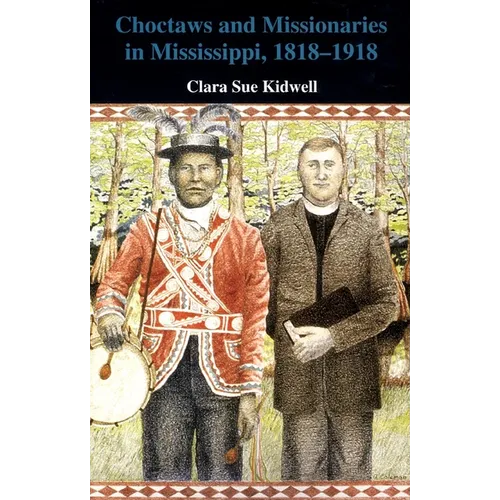
The present-day Choctaw communities in central Mississippi are a tribute to the ability of the Indian people both to adapt to new situations and to find refuge against the outside world through their uniqueness. Clara Sue Kidwell, whose great-great-grandparents migrated from Mississippi to Indian Territory along the Trail of Tears in 1830, here tells the story of those Choctaws who chose not to move but to stay behind in Mississippi.
As Kidwell shows, their story is closely interwoven with that of the missionaries who established the first missions in the area in 1818. While the U.S. government sought to "civilize" Indians through the agency of Christianity, many Choctaw tribal leaders in turn demanded education from Christian missionaries. The missionaries allied themselves with these leaders, mostly mixed-bloods; in so doing, the alienated themselves from the full-blood elements of the tribe and thus failed to achieve widespread Christian conversion and education. Their failure contributed to the growing arguments in Congress and by Mississippi citizens that the Choctaws should be move to the West and their territory opened to white settlement.
The missionaries did establish literacy among the Choctaws, however, with ironic consequences. Although the Treaty of Dancing Rabbit Creek in 1830 compelled the Choctaws to move west, its fourteenth article provided that those who wanted to remain in Mississippi could claim land as individuals and stay in the state as private citizens. The claims were largely denied, and those who remained were often driven from their lands by white buyers, yet the Choctaws maintained their communities by clustering around the few men who did get title to lands, by maintaining traditional customs, and by continuing to speak the Choctaw language. Now Christian missionaries offered the Indian communities a vehicle for survival rather than assimilation.
Back Jacket
The present-day Choctaw communities in central Mississippi are a tribute to the ability of the Indian people both to adapt to new situations and to find refuge against the outside world through their uniqueness. Clara Sue Kidwell, whose great-great-grandparents migrated from Mississippi to Indian Territory along the Trail of Tears in 1830, here tells the story of those Choctaws who chose not to move but to stay behind in Mississippi. As Kidwell shows, their story is closely interwoven with that of the missionaries who established the first missions in the area in 1818. While the U.S. government sought to "civilize" Indians through the agency of Christianity, many Choctaw tribal leaders in turn demanded education from Christian missionaries. The missionaries allied themselves with these leaders, mostly mixed-bloods; in so doing, they alienated themselves from the full-blood elements of the tribe and thus failed to achieve widespread Christian conversion and education. Their failure contributed to the growing arguments in Congress and by Mississippi citizens that the Choctaws should he moved to the West and their territory opened to white settlement. The missionaries did establish literacy among the Choctaws, however, with ironic consequences. Although the Treaty of Dancing Rabbit Creek in 1830 compelled the Choctaws to move west, its fourteenth article provided that those who wanted to remain in Mississippi could claim land as individuals and stay in the state as private citizens. The claims were largely denied, and those who remained were often driven from their lands by white buyers, yet the Choctaws maintained their communities by clustering around the few men who did get title tolands, by maintaining traditional customs, and by continuing to speak the Choctaw language. Now Christian missionaries offered the Indian communities a vehicle for survival rather than assimilation.



