


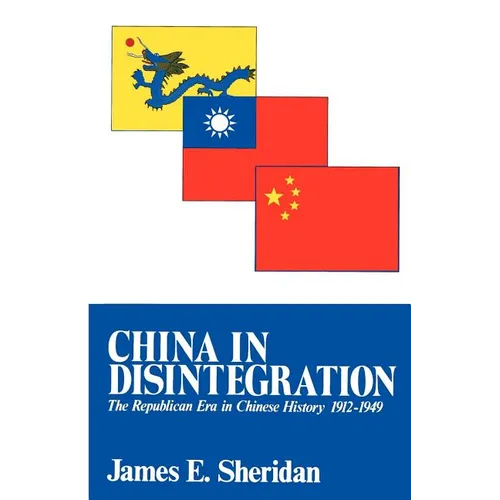
Product Description
by James E. Sheridan (Author)
After the 1911 fall of the Manchus came the most hideous breakdown in Chinese history. Sheridan, a Northwestern University scholar, concentrates on the Kuomintang movement of Chiang Kai-shek, insisting that we judge a political force by whether it solves the problems posed to it, not, as Chiang's partisans prefer, by means of what-if's. Sheridan's focus on the KMT brings more to light than do many surveys of Mao's revolutionaries. The KMT failed either to create an effective dictatorship or to mobilize fascist passions which could ensure willingness to "sacrifice." Thus the difficulty in squeezing enough wealth out of the peasantry to meet a foreign debt which totaled half the national revenue. The KMT did ensure that forced opium production took up at least a fifth of Chinese cropland by the 1929-1933 period, and they consolidated a soldier recruitment system that approximated Nazi roundups. However, the book underlines Chiang's failure to give the masses a ""Strength through Joy"" spirit; and, as wartime inflation of 300% gave way to postwar collapse, the anti-Communist pitch became emptier and emptier. The Kuomintang turned into a mere holding operation and faded into chaos. Sheridan gives a strong sense of the rapine of the warlords who were Chiang's off-and-on allies, and of the feeble heritage of Sun Yat-sen's patriotic platitudes. He leaves out explicit investigation of the international context while underlining, more than most writers, Chiang's commitment to repay external debt at the expense of the Chinese people. A sound and striking approach to these decades of desperation in the lives of a quarter of the human population--if not bypassed in the glut of "China books," it may encourage students and academics to go further. --Kirkus Reviews



