


Product Description
by Agricultural Research Service (Author), U. S. Department of Agriculture (Author)
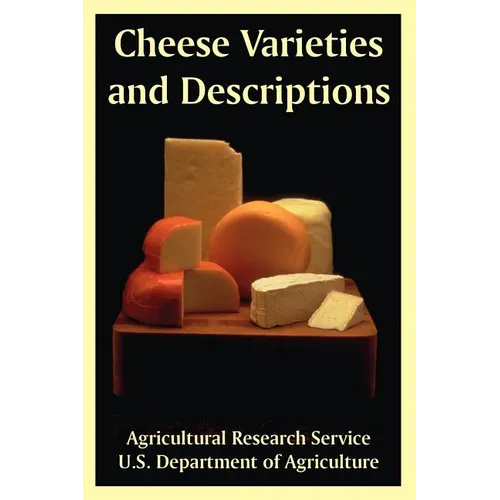
Cheese is a highly nutritious and palatable food. It is of value in the diet because it contains in concentrated form almost all the protein and usually most of the fat, as well as essential minerals, vitamins, and other nutrients, of milk. Cheese is made wherever animals are milked and produce more milk than the people use in fluid form. Most cheese is made from cow's milk, simply because cows are milked more generally throughout the world than other animals. Smaller quantities are made from the milk of goats and ewes. Cheese is also made in some countries from the milk of other animals, such as camels, asses, mares, buffaloes, and reindeer. People all over the world like and eat cheese. People in the United States are no exception. Although we do not eat nearly so much cheese per capita in the United States as do people in some countries, we eat nearly twice as much now as 20 years ago, or about 14 pounds (all kinds) per capita per year. This increased consumption is the result, at least in part, of improvements made in recent years in the quality and uniformity of many kinds of cheese. This publication was prepared to answer the questions of many people who ask for general information on the characteristics of cheeses and methods of production. Descriptions of the chesses were derived from many sources. Information came from a study of the literature and from cheese manufacturers and research workers. Although every effort was made to get complete and accurate information, often only fragmentary information was obtained.



