Product Description
by Charles River (Author)
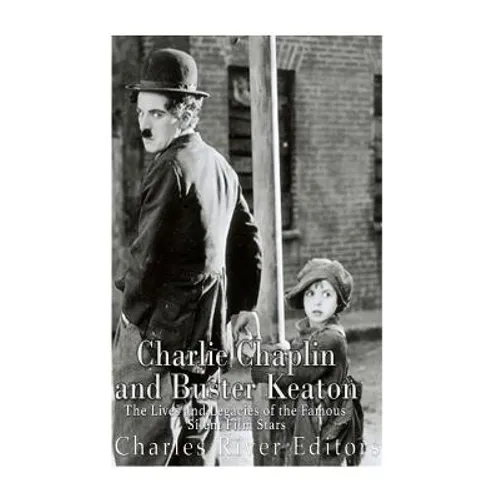
*Includes pictures *Includes the actors' quotes about their lives and careers *Includes a bibliography for further reading Only a select few actors become international stars in their time, but none had as unique a career as Charlie Chaplin. Chaplin was the first true film star, and he managed to do so even when films were still silent. He has been honored with too many awards to count, and the fact that his name remains instantly recognizable nearly a century after his first film is a testament to his influence. Even today, Chaplin's films are arguably more recognizable than those of perhaps any other actor or director; everyone is familiar with the famous "Tramp" costume and persona, and even the casual film enthusiast has likely seen films such as City Lights (1931) and Modern Times (1936). Chaplin is known for the singular blend of pathos and humor evinced by his films, and it is not uncommon for audiences to laugh and cry at alternate points of a Chaplin film, a trait that continues to endear audiences even to this day. For this reason, in his review of Stephen Weissman's biography of Chaplin, Martin Sieff noted, "It is doubtful any individual has every given more entertainment, pleasure, and relief to so many human beings when they needed it most." As Sieff's comment suggests, Chaplin's career coincided with the two World Wars and the Great Depression, but while Chaplin the actor was popular, Chaplin the person became controversial in the final decades of his life. In fact, there is a wide discrepancy between the almost uniformly enthusiastic praise of Chaplin today and the subversive identity he cultivated toward the latter part of his career. Although accusations of being a communist sympathizer and Chaplin's confrontation with the House Committee on Un-American Activities have mostly become a footnote in the storied career of a man best remembered as an acting pioneer, it forced Chaplin to spend the last 15 years of his career working as an artist in exile, and the shifting viewpoints of Chaplin were instrumental in forcing people to evaluate the way in which they viewed celebrities, as well as what it means to be entertained. In the 1920s, the burgeoning movie industry was starting to come into its own, and alongside actor and director Charlie Chaplin, Buster Keaton was at the peak of Hollywood. It's no surprise that Keaton was so effective in silent films, because he had been practicing comedy in his family's vaudeville acts as "The Little Boy Who Can't Be Damaged", becoming a popular performer by the age of 5. Indeed, his physical form of comedy, which initially involved having his father throwing him around the stage, translated well onto the screen, and some of his slapstick and other comic gags remain legendary even today, in part because Keaton practiced his own stunts. In fact, Keaton wrote his own material and was a crucial comic influence on acts like The Marx Brothers and The Three Stooges. In addition to being one of the foremost comedians of his time and writing his own stuff, Keaton also directed many of his own films, and he mastered the use of cameras at a time when film was still relatively new. As Time magazine writer Richard Corliss noted, "Watch his beautiful, compact body as it pirouettes or pretzels in tortured permutations or, even more elegantly, stands in repose as everything goes crazy around it. Watch his mind as it contemplates a hostile universe whose violent whims Buster understands, withstands and, miraculously, tames. Watch his camera taking his picture (Keaton directed or supervised all his best films); it is as cool as the star it captured in its glass... The medium was still in its infancy; comics were pioneering the craft of making people laugh at moving images. Keaton, it turns out, knew it all - intuitively."