


Product Description
by Stained Glass Association of America (Author)
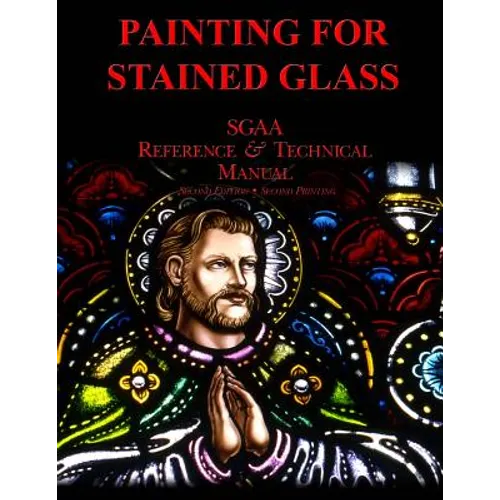
Chapter Thirteen, Painting for Stained Glass, from the Stained Glass Association of America's Reference & Technical Manual, Second Edition. The use of glass paint and silver stain has enriched the lives of stained glass artists more than most of us realize. Paint fired on glass was the first surface treatment of glass in leaded windows. The term 'stained glass, ' however, resulted from the later use of silver stain which, upon firing, permeates the glass and actually 'stains' it. The glass and lead of stained glass windows sets the stage for a story or concept, and the paint and stain supply the information that defines and communicates that story. Stained glass windows fill our world with the beauty of line and color and can be enhanced with the addition of paint or stain, adding further line and shading for form and definition. Admittedly, it is possible and plausible to design and construct many windows without paint, but eliminating the paint from others would deprive us of much of their beauty, and a vast storehouse of information and intellectual stimulation would be missing. Time and the elements have taken their toll on many of these windows, but those that remain still retain a great deal of the information the painter supplied. Since glass paints are almost as permanent as the glass itself, painting done today will be a part of the glass for a very long time. Knowing this, glass painters have a responsibility to themselves and to the future to see that what is painted on glass now is their best, both technically and artistically. It is hoped that the information in this section will help many in their quest for knowledge and furnish all with a respect for glass painting. Done well, painting can add a new dimension to glass work. It provides the ability to add lines and lettering, create texture and shading, and add some color in selected areas. Before learning to paint it is prudent to know as much about this medium as possible. The history of painting, the technical information about the paints and the tools used, all provide a background to the painting techniques themselves. These techniques, such as tracing, matting, silver staining, and enameling, are basic, but other uses for paints, such as silk screening, air brushing, etc., can prove invaluable in many instances.



