Product Description
by Jukka Gronow (Author)
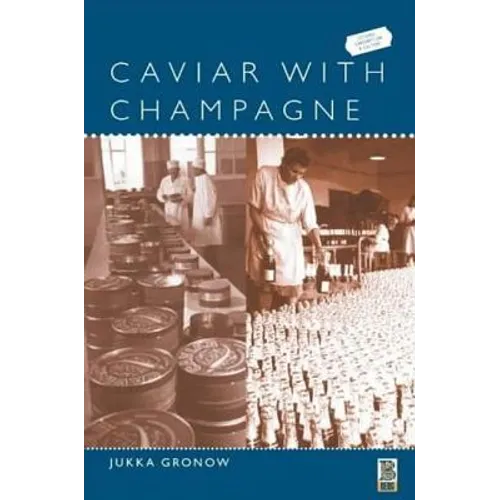
'Life has become more joyous, comrades.' Josef Stalin, 1936 Stalin's Russia is best known for its political repression, forced collectivization and general poverty. Caviar with Champagne presents an altogether different aspect of Stalin's rule that has never been fully analyzed - the creation of a luxury goods society. At the same time as millions were queuing for bread and starving, drastic changes took place in the cultural and economic policy of the country, which had important consequences for the development of Soviet material culture and the promotion of its ideals of consumption. The 1930s witnessed the first serious attempt to create a genuinely Soviet commercial culture that would rival the West. Government ministers took exploratory trips to America to learn about everything from fast food hamburgers to men's suits in Macy's. The government made intricate plans to produce high-quality luxury goods en masse, such as chocolate, caviar, perfume, liquor and assorted novelties. Perhaps the best symbol of this new cultural order was Soviet Champagne, which launched in 1936 with plans to produce millions of bottles by the end of the decade. Drawing on previously neglected archival material, Jukka Gronow examines how such new pleasures were advertised and enjoyed. He interprets Soviet-styled luxury goods as a form of kitsch and examines the ideological underpinnings behind their production. This new attitude toward consumption was accompanied by the promotion of new manners of everyday life. The process was not without serious ideological contradictions. Ironically, a factory worker living in the United States - the largest capitalist society in the world - would have been hard-pressed to afford caviar or champagne for a special occasion in the 1930s, but a Soviet worker theoretically could (assuming supplies were in stock). The Soviet example is unique since the luxury culture had to be created entirely from scratch, and the process was taken extremely seriously. Even the smallest decisions, such as the design of perfume bottles, were made at the highest level of government by the People's Commissars. Sometimes the interpretation of 'luxury goods' bordered on the comical, such as the push to produce Soviet ketchup and wurst.
Author Biography
Jukka Gronow is at the Department of Sociology, Uppsala University.