Skip to content
Welcome To Our Store.
100,000+ Products for Home, Medical, Office & Classroom Needs
Search
Skip to product information
1 of 2

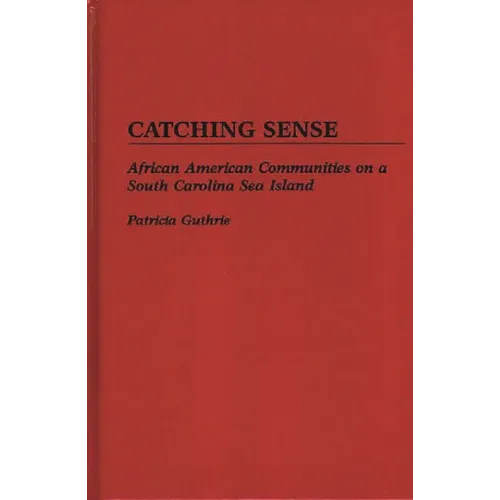
Catching Sense: African American Communities on a South Carolina Sea Island - Hardcover

$180.00 USD
$180.00 USD
Sale Sold out
Shipping calculated at checkout.
In stock (100 units), ready to be shipped

Available Offers

Fast delivery available on most orders

Multiple secure payment options accepted

Secure checkout with
  • American Express
  • Apple Pay
  • Diners Club
  • Discover
  • Google Pay
  • Mastercard
  • PayPal
  • Shop Pay
  • Visa

Flight Range: Up to 1,000 meters (3,280 feet)

Maximum Speed: 45 kilometers per hour (28 miles per hour)

For all orders exceeding a value of 100USD shipping is offered for free.

Returns will be accepted for up to 10 days of Customer’s receipt or tracking number on unworn items. You, as a Customer, are obliged to inform us via email before you return the item.

Otherwise, standard shipping charges apply. Check out our delivery Terms & Conditions for more details.

View Product Details
Shopping cart
Product Product subtotal Quantity Price Product subtotal
Catching Sense: African American Communities on a South Carolina Sea Island - Hardcover
$180.00/ea
$0.00
$180.00/ea $0.00

Product Description

by Patricia Guthrie (Author)

Plantation membership, an important association that continues to carry meaning in today's African-American communities on the Sea Islands, depends on one's residence between the ages of two and 12. This is the time when one catches sense, or learns the difference between right and wrong and the meaning of social relationships. Plantation membership confers rights and duties to its members for life, particularly in the areas of dispute settlement, adjudication, and status confirmation. The praise house system, which was the focal point of plantation life, is analyzed historically and in terms of the ethnographic present. Guthrie, an African-American anthropologist, believes that much of what she witnessed on St. Helena during her field research was a response to the experience of slavery when identity was derived from plantation residency rather than from mother, father, or place of birth.

Author Biography

PATRICIA GUTHRIE is director of the Women's Studies Program at California State University, Hayward, where she is Associate Professor in the Department of Human Development. She is the author of many articles on racism, women's lives, and the African American community.


Number of Pages: 160
Dimensions: 0.65 x 9.51 x 6.28 IN
Illustrated: Yes
Publication Date: April 18, 1996
you might like
