Skip to content
Welcome To Our Store.
100,000+ Products for Home, Medical, Office & Classroom Needs
Search
Skip to product information
1 of 2

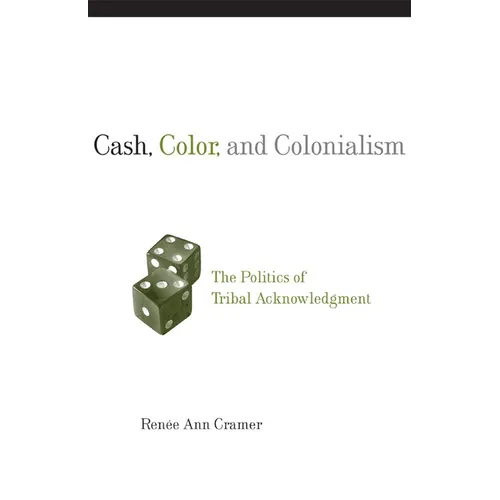
Cash, Color, and Colonialism: The Politics of Tribal Acknowledgment - Paperback

$39.51 USD
$39.51 USD
Sale Sold out
Shipping calculated at checkout.
In stock (100 units), ready to be shipped

Available Offers

Fast delivery available on most orders

Multiple secure payment options accepted

Secure checkout with
  • American Express
  • Apple Pay
  • Diners Club
  • Discover
  • Google Pay
  • Mastercard
  • PayPal
  • Shop Pay
  • Visa

Flight Range: Up to 1,000 meters (3,280 feet)

Maximum Speed: 45 kilometers per hour (28 miles per hour)

For all orders exceeding a value of 100USD shipping is offered for free.

Returns will be accepted for up to 10 days of Customer’s receipt or tracking number on unworn items. You, as a Customer, are obliged to inform us via email before you return the item.

Otherwise, standard shipping charges apply. Check out our delivery Terms & Conditions for more details.

View Product Details
Shopping cart
Product Product subtotal Quantity Price Product subtotal
Cash, Color, and Colonialism: The Politics of Tribal Acknowledgment - Paperback
$39.51/ea
$0.00
$39.51/ea $0.00

Product Description

by Renee Ann Cramer (Author)

Within the context of U.S.-Indian law, federal acknowledgment establishes a trust relationship between an Indian tribe and the U.S. government. As a result of that trust, the tribe receives significant benefits, including tax-exempt status, reclamation rights, and--of perhaps greatest modern-day interest to the American public--the right to administer and profit from its own casinos.

Some tribes, however, have not been federally acknowledged, or, in more common language, "recognized." In Cash, Color, and Colonialism, Renée Ann Cramer offers a comprehensive analysis of the federal acknowledgment process, placing it in historical, legal, and social context.

Exploring the formal and informal struggles over acknowledgment, Cramer argues that we cannot fully understand the process until we understand three contexts within which it operates: the growth of casino interests since 1988, the prevalence of racial attitudes concerning Indian identity, and the colonial legacy of U.S.-Indian law.


Number of Pages: 260
Dimensions: 0.7 x 8.9 x 5.9 IN
Publication Date: October 01, 2008
you might like
