


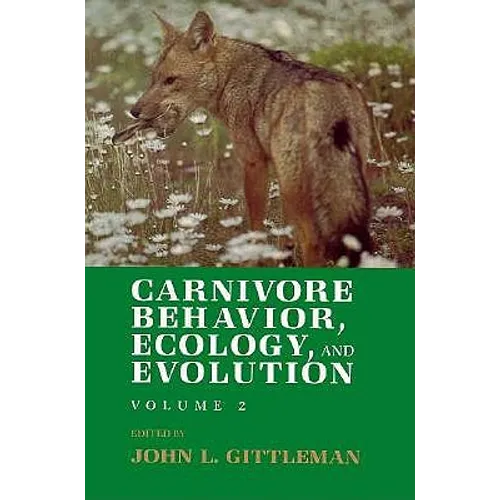
Product Description
by John L. Gittleman (Editor)
Because carnivores are at the top of the food chain, their status is an important indicator of the health of the world ecosystem. They are intensely interesting to zoologists and uniquely intriguing to the general public. Devoted primarily to terrestrial carnivores, this volume focuses on such themes as carnivore reintroduction programs and the ethics of studying carnivores, drawing examples from a variety of species.
The need to evaluate new conceptual ideas and empirical data inspired this volume of Carnivore Behavior, Ecology, and Evolution, a complement to the original book. In the eight years since publication of the first volume, conservation has emerged as a thematic imperative. The study of carnivores has become even more important in raising and resolving crucial biological problems. Differential rates of mortality in the giant panda and other endangered carnivores are now known to influence dispersal and life history patterns basic to these species' survival. Reintroduction efforts of the black-footed ferret and the red wolf are establishing essential guidelines for preservation and management of endangered species. Studies of the African lion and the dwarf mongoose illustrate the power of new genetic techniques of DNA fingerprinting for understanding the evolution of social behavior.
Back Jacket
Because carnivores are at the top of the food chain, their status is an important indicator of the health of the world ecosystem. They are intensely interesting to zoologists and uniquely intriguing to the general public. Devoted primarily to terrestrial carnivores, this volume focuses on such themes as carnivore reintroduction programs and the ethics of studying carnivores, drawing examples from a variety of species.
Author Biography
John L. Gittleman is Research Assistant Professor of Zoology and a member of the Faculty of Graduate Programs in Ecology and Ethology at the University of Tennessee. George B. Schaller directs the Wildlife Conservation Society and is the author of The Last Panda.