


Product Description
by Sina Najafi (Editor)
From hollowed gourds to cardboard boxes: a history of the "container"
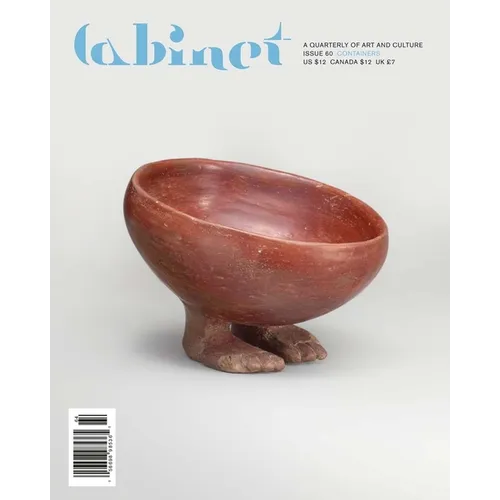
Just as the very first constructed containers emerged at a time when new techniques of food gathering and storage began to give rise to novel technologies of collection, transportation and conservation, so too have the innovations in "packaging" across the hundreds of intervening millennia both flowed from, and made possible, new modes of social, cultural and economic activity. Familiar throughout history on both the domestic (from hollowed gourds or animal skin pouches to clay pots, amphorae, and glass jars and bottles) and commercial scales (from chests and barrels to tin cans, cardboard boxes, wooden crates and the intermodal shipping systems that carry so much of the modern world's goods), the container is arguably the most fundamental instrument of human civilization--a technology that facilitates the varied methods of ordering, preservation and conveyance that underpin the most basic forms of human labor and communal structure. Cabinet issue 60, with a special section on "Containers," includes Simon Asad on the challenge that efficient packing poses for mathematics; Jason Hamlin on attempts to recycle glass bottles as architectural materials; Margaret Bode on specimen boxes in the history of science; and Susan Lopez on the rise of the modern cardboard box in 19th-century Brooklyn. Elsewhere in the issue: Cecilia Sjöholm on the history of book burning; Avinoam Shalem on urban archaeology and "vertical knowledge"; and an artist project by Agniezka Kurant.
Number of Pages: 112
Dimensions: 0.4 x 9.7 x 7.9 IN
Publication Date: October 25, 2016