Skip to content
Welcome To Our Store.
100,000+ Products for Home, Medical, Office & Classroom Needs
Search
Skip to product information
1 of 2

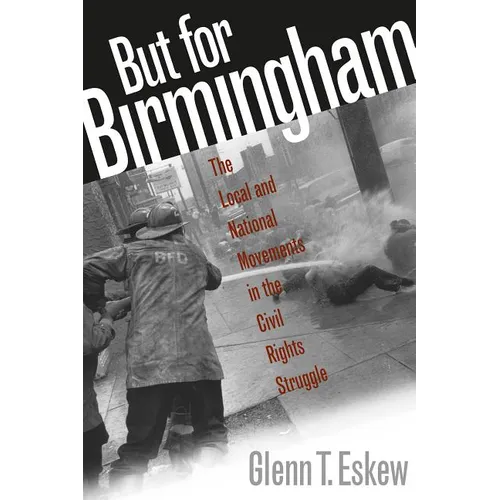
But for Birmingham: The Local and National Movements in the Civil Rights Struggle - Paperback

$76.95 USD
$76.95 USD
Sale Sold out
Shipping calculated at checkout.
In stock (100 units), ready to be shipped

Available Offers

Fast delivery available on most orders

Multiple secure payment options accepted

Secure checkout with
  • American Express
  • Apple Pay
  • Diners Club
  • Discover
  • Google Pay
  • Mastercard
  • PayPal
  • Shop Pay
  • Visa

Flight Range: Up to 1,000 meters (3,280 feet)

Maximum Speed: 45 kilometers per hour (28 miles per hour)

For all orders exceeding a value of 100USD shipping is offered for free.

Returns will be accepted for up to 10 days of Customer’s receipt or tracking number on unworn items. You, as a Customer, are obliged to inform us via email before you return the item.

Otherwise, standard shipping charges apply. Check out our delivery Terms & Conditions for more details.

View Product Details
Shopping cart
Product Product subtotal Quantity Price Product subtotal
But for Birmingham: The Local and National Movements in the Civil Rights Struggle - Paperback
$76.95/ea
$0.00
$76.95/ea $0.00

Product Description

by Glenn T. Eskew (Author)

Birmingham served as the stage for some of the most dramatic and important moments in the history of the civil rights struggle. In this vivid narrative account, Glenn Eskew traces the evolution of nonviolent protest in the city, focusing particularly on the sometimes problematic intersection of the local and national movements.

Eskew describes the changing face of Birmingham's civil rights campaign, from the politics of accommodation practiced by the city's black bourgeoisie in the 1950s to local pastor Fred L. Shuttlesworth's groundbreaking use of nonviolent direct action to challenge segregation during the late 1950s and early 1960s.

In 1963, the national movement, in the person of Martin Luther King Jr., turned to Birmingham. The national uproar that followed on Police Commissioner Bull Connor's use of dogs and fire hoses against the demonstrators provided the impetus behind passage of the watershed Civil Rights Act of 1964.

Paradoxically, though, the larger victory won in the streets of Birmingham did little for many of the city's black citizens, argues Eskew. The cancellation of protest marches before any clear-cut gains had been made left Shuttlesworth feeling betrayed even as King claimed a personal victory. While African Americans were admitted to the leadership of the city, the way power was exercised -- and for whom -- remained fundamentally unchanged.

Author Biography

Glenn T. Eskew is associate professor of history at Georgia State University.

Number of Pages: 456
Dimensions: 1.16 x 9.32 x 6.16 IN
Illustrated: Yes
Publication Date: December 15, 1997
you might like

