Product Description
by Mauro Testaverde (Author), Jacquelyn Pavilon (Author)
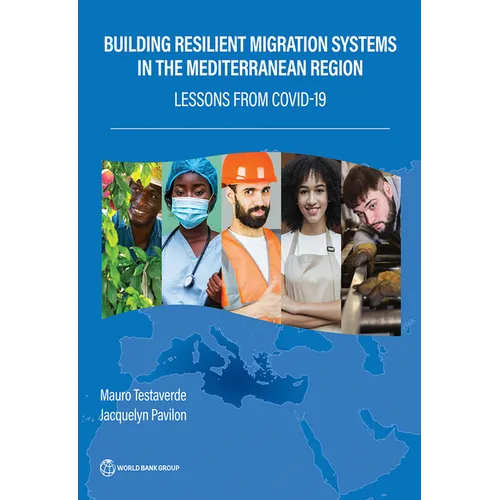
For thousands of years, migration has been a source of social and economic well-being for people living on different shores of the Mediterranean Sea. Whether through higher earnings for migrants, access to labor for receiving countries, or remittances for sending communities, migration has been an important driver of development in the Mediterranean region. The COVID-19 (coronavirus) pandemic has severely disrupted this complex web of movements, raising questions about whether migration will continue to be an important driver of the region's well-being. As time passed, it became clear that the drivers of migration are so strong that mobility restrictions can only reduce movements, not halt them entirely. Building Resilient Migration Systems in the Mediterranean Region: Lessons from COVID-19 presents evidence on the implications of the COVID-19 pandemic on mobility in the region to inform policy responses that can help countries restart migration safely and better respond to future shocks. While some of the challenges that emerged during the pandemic are specific to public health crises, others are common to different types of shocks, including those related to economic, conflict, or climate-related factors. To inform this reform process, this book suggests a set of actions that can help Mediterranean countries to maximize the benefits of migration for all people living in the region, while at the same time ensuring the sustainability of migration flows. As a whole, these proposed policy actions point to a vision of migration resilience that, even during crises, can address key labor shortages, keep both migrant and native populations safer, sustain household incomes, and ameliorate blows to economic growth. The COVID-19 pandemic has created momentum for policy reforms. Whether this crisis can illuminate the way toward better adapting migration systems to future crises will depend on learning its lessons.
Author Biography
The World Bank came into formal existence in 1945 following the international ratification of the Bretton Woods agreements. It is a vital source of financial and technical assistance to developing countries around the world. The organization's activities are focused on education, health, agriculture and rural development, environmental protection, establishing and enforcing regulations, infrastructure development, governance and legal institutions development. The World Bank is made up of two unique development institutions owned by its 185 Member Countries. The International Bank for Reconstruction and Development (IBRD) focuses on middle income and creditworthy poor countries and the International Development Association (IDA), which focuses on the poorest countries in the world.