Product Description
by Angela Aleiss (Author)
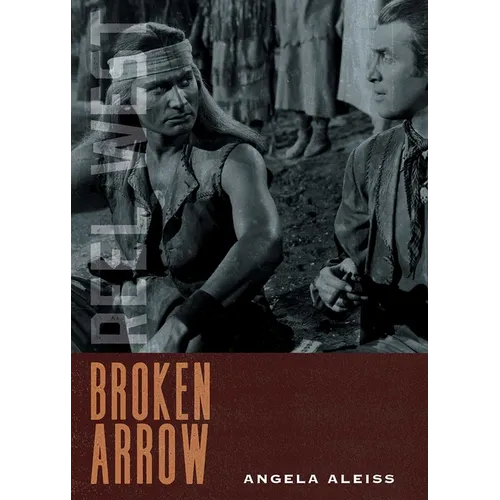
An insightful history and analysis of the importance Delmer Daves' film Broken Arrow has in the western film genre. It was, for its time, a breakthrough in how Native Americans were depicted in the movies.
The release of Broken Arrow in 1950 represented a turning point in Hollywood's portrayal of Native Americans. Film scholars have often cited director Delmer Daves's movie as the first sound film to depict the Native American sympathetically, and it appealed to a postwar ideal of tolerance and racial equality that became prominent in later Westerns. Yet Broken Arrow certainly has its flaws: the Apache speak English, whites are cast in leading Apache roles, and Apache culture is highly romanticized. Additionally, many scholars agree that the movie lacks the polish of Daves's later Western 3:10 to Yuma (1957), with its evocative cinematography and psychological undertones. Despite its inaccuracies and the many artistic liberties it takes, the movie contains powerful political and social statements about Hollywood and its attitude toward Indian/white relations. Author Angela Aleiss breaks down the way Broken Arrow probed these attitudes and influenced a long series of films with Native heroes that followed, marking a transformation in Hollywood's portrayal of Native Americans.Author Biography
Angela Aleiss has been writing about Native American images in Hollywood for more than thirty years. She was awarded a postdoctoral research fellowship at UCLA's Institute of American Cultures / American Indian Studies Center and was a recipient of the Canada-US Fulbright fellowship to study in residence at the University of Toronto. She is the author of Making the White Man's Indian: Native Americans and Hollywood Movies and Hollywood's Native Americans: Stories of Identity and Resistance, and she has contributed articles to Indian Country Today, The Hollywood Reporter, and The Los Angeles Times.