


Product Description
by Lucy Chester (Author)
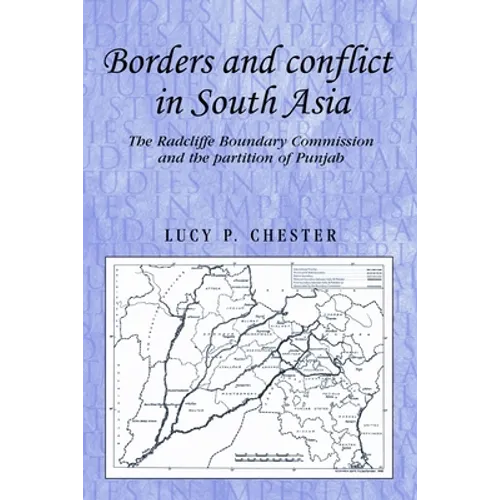
Borders and conflict in South Asia is the first full-length study of the 1947 drawing of the Indo-Pakistani boundary in Punjab. Using the Radcliffe commission as a window onto the decolonisation and independence of India and Pakistan, and examining the competing interests - both internal and international - that influenced the actions of the various major players, it highlights British efforts to maintain a grip on India even as the decolonisation process spun out of control. Drawing on extensive archival research in India, Pakistan and Britain, combined with innovative use of cartographic sources, the book paints a vivid picture of both the partition process and the Radcliffe line's impact on Punjab.
This book will be vital reading for scholars and students of colonialism, decolonisation, partition, and borderlands studies, while providing anyone interested in South Asia's independence with a highly readable account of one of its most controversial episodes.Front Jacket
Borders and conflict in South Asia: The Radcliffe boundary commission and the partition of Punjab is the first full-length study of the 1947 drawing of the Indo-Pakistani boundary in Punjab. Using the Radcliffe commission as a window onto the decolonization and independence of India and Pakistan, and examining the competing interests, both internal and international, that influenced the actions of the various major players, it highlights British efforts to maintain a grip on India even as the decolonization process spun out of control. It also demonstrates that it was not the location of the line but flaws in the larger partition process that caused the mass violence and chaos of 1947. Drawing on extensive archival research in India, Pakistan, and Britain, combined with innovative use of cartographic sources, the book paints a vivid picture of both the partition process and the Radcliffe line's impact on Punjab. This book will be vital reading for scholars and students of colonialism, decolonization, partition, and borderlands studies, while providing anyone interested in South Asia's independence with a highly readable account of one of its most controversial episodes.
Back Jacket
Borders and conflict in South Asia: The Radcliffe boundary commission and the partition of Punjab is the first full-length study of the 1947 drawing of the Indo-Pakistani boundary in Punjab. Using the Radcliffe commission as a window onto the decolonization and independence of India and Pakistan, and examining the competing interests, both internal and international, that influenced the actions of the various major players, it highlights British efforts to maintain a grip on India even as the decolonization process spun out of control. It also demonstrates that it was not the location of the line but flaws in the larger partition process that caused the mass violence and chaos of 1947. Drawing on extensive archival research in India, Pakistan, and Britain, combined with innovative use of cartographic sources, the book paints a vivid picture of both the partition process and the Radcliffe line's impact on Punjab.
This book will be vital reading for scholars and students of colonialism, decolonization, partition, and borderlands studies, while providing anyone interested in South Asia's independence with a highly readable account of one of its most controversial episodes.Author Biography
Lucy P. Chester is Associate Professor of History and International Affairs at the University of Colorado at Boulder



