Product Description
by Fulbert Tchana Tchana (Author), Aboudrahyme Savadogo (Author), Claudia Noumedem Temgoua (Author)
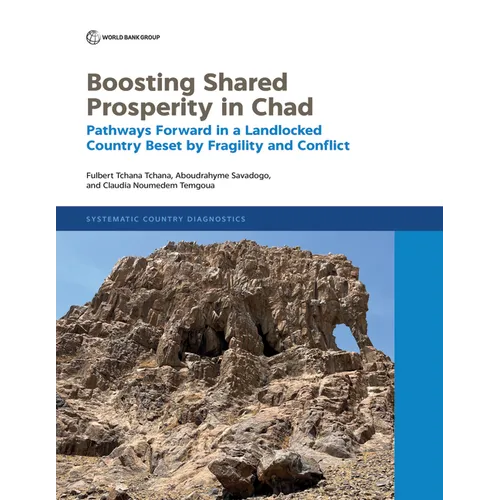
Chad remains among the least developed countries in the world; its GDP per capita has contracted since 2015, preventing the country from reducing poverty and from improving development outcomes. Progress on reducing poverty has stalled, and the number of extreme poor has increased, with both trends exacerbated by the COVID-19 pandemic. Boosting Shared Prosperity in Chad is an update of the 2015 Systematic Country Diagnostic (SCD); this update confirms that economic growth and poverty reduction continue to be hindered by the same constraints that were previously identified: weak human capital and a slow demographic transition, low productivity, low incomes from economic activity in rural areas, insufficient and volatile infrastructure investments, high gender inequality, and weak public administration services. This SCD update adds three more constraints: insecurity and conflict, inadequate macroeconomic management of economic shocks, and vulnerability to climate change, all of which increasingly undermine progress. Boosting Shared Prosperity in Chad argues that the success of reform efforts will depend on the country's ability to address the drivers of fragility, conflict, and violence; adapt to climate change; promote an adequate macrofiscal framework; and create a business-friendly regulatory environment. Pathways to accelerate poverty reduction focus on strengthening human capital, improving infrastructure, and developing sectors with strategic advantages.
Author Biography
The World Bank came into formal existence in 1945 following the international ratification of the Bretton Woods agreements. It is a vital source of financial and technical assistance to developing countries around the world. The organization's activities are focused on education, health, agriculture and rural development, environmental protection, establishing and enforcing regulations, infrastructure development, governance and legal institutions development. The World Bank is made up of two unique development institutions owned by its 185 Member Countries. The International Bank for Reconstruction and Development (IBRD) focuses on middle income and creditworthy poor countries and the International Development Association (IDA), which focuses on the poorest countries in the world.