Skip to content
Welcome To Our Store.
100,000+ Products for Home, Medical, Office & Classroom Needs
Search
Skip to product information
1 of 1

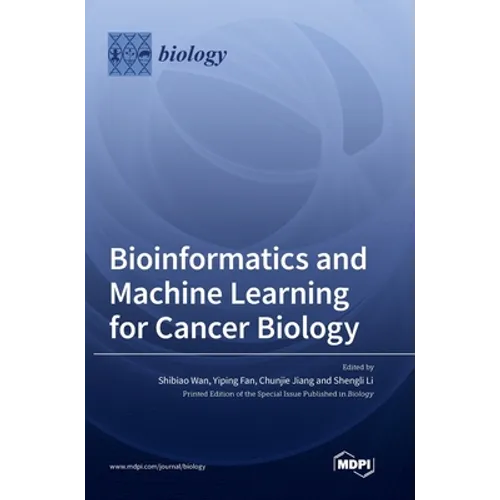
Bioinformatics and Machine Learning for Cancer Biology - Hardcover

$79.99 USD
$79.99 USD
Sale Sold out
Shipping calculated at checkout.
In stock (100 units), ready to be shipped

Available Offers

Fast delivery available on most orders

Multiple secure payment options accepted

Secure checkout with
  • American Express
  • Apple Pay
  • Diners Club
  • Discover
  • Google Pay
  • Mastercard
  • PayPal
  • Shop Pay
  • Visa

Flight Range: Up to 1,000 meters (3,280 feet)

Maximum Speed: 45 kilometers per hour (28 miles per hour)

For all orders exceeding a value of 100USD shipping is offered for free.

Returns will be accepted for up to 10 days of Customer’s receipt or tracking number on unworn items. You, as a Customer, are obliged to inform us via email before you return the item.

Otherwise, standard shipping charges apply. Check out our delivery Terms & Conditions for more details.

View Product Details
Shopping cart
Product Product subtotal Quantity Price Product subtotal
Bioinformatics and Machine Learning for Cancer Biology - Hardcover
$79.99/ea
$0.00
$79.99/ea $0.00

Product Description

by Shibiao Wan (Editor), Yiping Fan (Editor), Chunjie Jiang (Editor)

Cancer is a leading cause of death worldwide, claiming millions of lives each year. Cancer biology is an essential research field to understand how cancer develops, evolves, and responds to therapy. By taking advantage of a series of "omics" technologies (e.g., genomics, transcriptomics, and epigenomics), computational methods in bioinformatics and machine learning can help scientists and researchers to decipher the complexity of cancer heterogeneity, tumorigenesis, and anticancer drug discovery. Particularly, bioinformatics enables the systematic interrogation and analysis of cancer from various perspectives, including genetics, epigenetics, signaling networks, cellular behavior, clinical manifestation, and epidemiology. Moreover, thanks to the influx of next-generation sequencing (NGS) data in the postgenomic era and multiple landmark cancer-focused projects, such as The Cancer Genome Atlas (TCGA) and Clinical Proteomic Tumor Analysis Consortium (CPTAC), machine learning has a uniquely advantageous role in boosting data-driven cancer research and unraveling novel methods for the prognosis, prediction, and treatment of cancer.

Number of Pages: 198
Dimensions: 0.69 x 9.61 x 6.69 IN
Publication Date: August 11, 2022
you might like