Skip to content
Save 5% on your next order with code PREMIUM5!
100,000+ Products for Home, Medical, Office & Classroom Needs
Search
Skip to product information
1 of 1

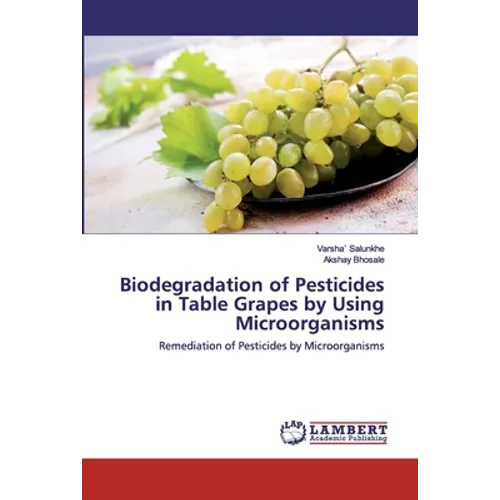
Biodegradation of Pesticides in Table Grapes by Using Microorganisms - Paperback

$119.59 USD
$119.59 USD
Sale Sold out
Shipping calculated at checkout.
In stock (100 units), ready to be shipped

Available Offers

Fast delivery available on most orders

Multiple secure payment options accepted

Secure checkout with
  • American Express
  • Apple Pay
  • Diners Club
  • Discover
  • Google Pay
  • Mastercard
  • PayPal
  • Shop Pay
  • Visa

Flight Range: Up to 1,000 meters (3,280 feet)

Maximum Speed: 45 kilometers per hour (28 miles per hour)

For all orders exceeding a value of 100USD shipping is offered for free.

Returns will be accepted for up to 10 days of Customer’s receipt or tracking number on unworn items. You, as a Customer, are obliged to inform us via email before you return the item.

Otherwise, standard shipping charges apply. Check out our delivery Terms & Conditions for more details.

View Product Details
Shopping cart
Product Product subtotal Quantity Price Product subtotal
Biodegradation of Pesticides in Table Grapes by Using Microorganisms - Paperback
$119.59/ea
$0.00
$119.59/ea $0.00

Product Description

by Varsha` Salunkhe (Author), Akshay Bhosale (Author)

Grape is one of the most delicious and exotic fruit crops of India with great potential for domestic and foreign marketing as fresh fruits as well as processed products like wine and raisins. Many of the diseases and pests especially powdery mildew disease and insect pests like mealy bugs and mites attack grapes even near harvest. As there is no other viable alternative to chemicals for pest management, growers have no option to save their crop except by the use of pesticides, even at the risk of residue accumulations at harvest. These high numbers of sprays increases the problem of detection of pesticide residues at above maximum residue limit (MRL) at harvest, thus compromising food safety. The study will be directed at identifying the microorganisms, screening of the metabolites and the enzymes associated with the degradation of specific pesticide compounds. Many of these micro-organisms are considered safe for use in agriculture. Initial identification of the potential microorganisms will be done in vitro i.e. under controlled conditions, followed by in vivo studies.

Number of Pages: 232
Dimensions: 0.53 x 9 x 6 IN
Publication Date: September 19, 2020
you might like