


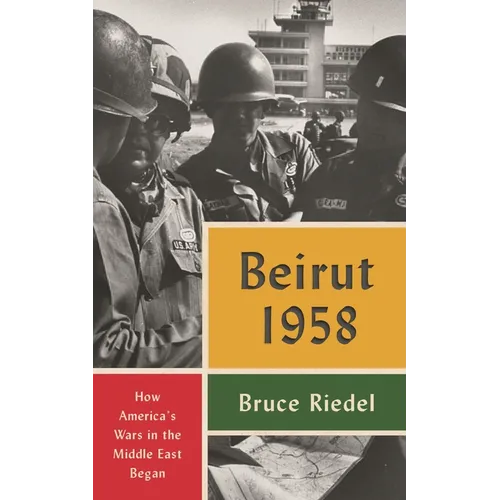
Product Description
by Bruce Riedel (Author)
Find out about the 1958 U.S. intervention that succeeded and apply those lessons to today's conflicts in the Middle East
In July 1958, U.S. Marines stormed the beach in Beirut, Lebanon, ready for combat. They were greeted by vendors and sunbathers. Fortunately, the rest of their mission--helping to end Lebanon's first civil war--went nearly as smoothly and successfully, thanks in large part to the skillful work of American diplomats who helped arrange a compromise solution. Future American interventions in the region would not work out quite as well.
Bruce Riedel's new book tells the now-forgotten story (forgotten, that is, in the United States) of the first U.S. combat operation in the Middle East. President Eisenhower sent the Marines in the wake of a bloody coup in Iraq, a seismic event that altered politics not only of that country but eventually of the entire region. Eisenhower feared that the coup, along with other conspiracies and events that seemed mysterious back in Washington, threatened American interests in the Middle East. His action, and those of others, were driven in large part by a cast of fascinating characters whose espionage and covert actions could be grist for a movie.
Although Eisenhower's intervention in Lebanon was unique, certainly in its relatively benign outcome, it does hold important lessons for today's policymakers as they seek to deal with the always unexpected challenges in the Middle East. Veteran analyst Bruce Reidel describes the scene as it emerged six decades ago, and he suggests that some of the lessons learned then are still valid today. A key lesson? Not to rush to judgment when surprised by the unexpected. And don't assume the worst.
Back Jacket
From today's vantage point, it is difficult--almost impossible, even--to recall that one U.S. military intervention in the Middle East turned out positively. It happened six decades ago, in a very different era, but lessons learned from then remain relevant today.
In July 1958, U.S. Marines stormed the beach in Beirut, Lebanon, ready for combat. They were greeted by vendors and sunbathers. Fortunately, the rest of their mission--helping to end Lebanon's first civil war--went nearly as smoothly and successfully, thanks in large part to the skillful work of American diplomats who helped arrange a compromise that ended the war. Future American interventions in the region would not work out quite as well.
Bruce Riedel's new book tells the now forgotten story of the first U.S. combat operation in the Middle East. President Dwight Eisenhower sent the Marines in the wake of a bloody coup in Iraq, a seismic event not only for that country, but eventually for the entire region. Eisenhower feared that the coup, along with other conspiracies and events that seemed mysterious back in Washington, threatened American interests in the Middle East. His response, and those of others, were largely driven by a cast of fascinating characters whose espionage and covert actions could be grist for a movie.
Although Eisenhower's intervention in Lebanon was unique, certainly in its relatively benign outcome, it does hold important lessons for today's policymakers as they seek to deal with the always unexpected challenges in the Middle East. Veteran analyst Bruce Riedel describes the scene as it emerged in the early 1950s, and he urges Washington to recall some of the key lessons from that time: Don't rush to judgment when surprised by the unexpected, and don't assume either the worst, or the best, especially in the Middle East.
Author Biography
Bruce Riedel is the Director of the Intelligence Project at the Brookings Institution and a Senior Fellow in the Center for Middle East Studies. He is the author of Kings and Presidents: Saudi Arabia and the United States since FDR and five other books. Prior to coming to Brookings, he served thirty years in the Central Intelligence Agency with postings in the Middle East and Europe, and in the White House and Pentagon.



