Skip to content
Save 5% on your next order with code PREMIUM5!
100,000+ Products for Home, Medical, Office & Classroom Needs
Search
Skip to product information
1 of 1

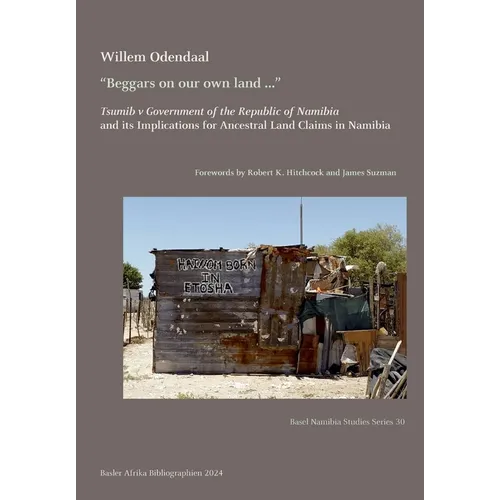
"Beggars on our own land ...": Tsumib v Government of the Republic of Namibia and its Implications for Ancestral Land Claims in Namibia - Paperback

$52.92 USD
$52.92 USD
Sale Sold out
Shipping calculated at checkout.
In stock (100 units), ready to be shipped

Available Offers

Fast delivery available on most orders

Multiple secure payment options accepted

Secure checkout with
  • American Express
  • Apple Pay
  • Diners Club
  • Discover
  • Google Pay
  • Mastercard
  • PayPal
  • Shop Pay
  • Visa

Flight Range: Up to 1,000 meters (3,280 feet)

Maximum Speed: 45 kilometers per hour (28 miles per hour)

For all orders exceeding a value of 100USD shipping is offered for free.

Returns will be accepted for up to 10 days of Customer’s receipt or tracking number on unworn items. You, as a Customer, are obliged to inform us via email before you return the item.

Otherwise, standard shipping charges apply. Check out our delivery Terms & Conditions for more details.

View Product Details
Shopping cart
Product Product subtotal Quantity Price Product subtotal
"Beggars on our own land ...": Tsumib v Government of the Republic of Namibia and its Implications for Ancestral Land Claims in Namibia - Paperback
$52.92/ea
$0.00
$52.92/ea $0.00

Product Description

by Willem Odendaal (Author)

In 1954, the Haillom people were evicted from Etosha by the South African-con-trolled South West African Administration. In 2015, the Haillom filed the case of Tsumib v Government of the Republic of Namibia in the High Court of Namibia. "Beggars on our own land ..." unravels the historical and contemporary socio-legal complexities that led to the Tsumib case. At the core of the case lies the legal question, how can the Haillom people approach the Namibian Courts in order to claim compensation for the loss of their ancestral lands? Odendaal goes into detail how the Tsumib case materialised under the post-inde-pendence Namibian constitutional discourse. He assesses the Namibian land re form programme and its oversight in dealing with historical land dispossessions. He inspects Haillom "identity" and how it was used to strengthen their case. He concludes with an examination of Namibia's outdated and restrictive legal frame-work, which ultimately denied the Haillom people their constitutional right to be heard in the Namibian Court. While the future of ancestral land claims in Namibia depends on the political will of the Namibian government, Odendaal argues that the Namibian courts have a duty to comply with the rights giving nature of the Namibian Constitution that lays the foundation for the Haillom people's ancestral claims.



Number of Pages: 272
Dimensions: 0.57 x 9.61 x 6.69 IN
Publication Date: March 27, 2024
you might like