Product Description
by Mary Fulbrook (Editor), Andrew I. Port (Editor)
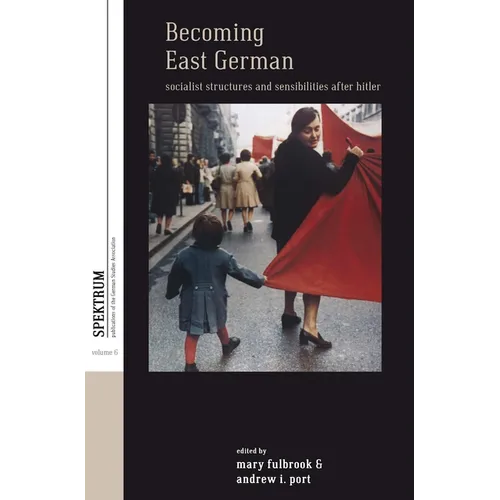
For roughly the first decade after the demise of the GDR, professional and popular interpretations of East German history concentrated primarily on forms of power and repression, as well as on dissent and resistance to communist rule. Socio-cultural approaches have increasingly shown that a single-minded emphasis on repression and coercion fails to address a number of important historical issues, including those related to the subjective experiences of those who lived under communist regimes. With that in mind, the essays in this volume explore significant physical and psychological aspects of life in the GDR, such as health and diet, leisure and dining, memories of the Nazi past, as well as identity, sports, and experiences of everyday humiliation. Situating the GDR within a broader historical context, they open up new ways of interpreting life behind the Iron Curtain - while providing a devastating critique of misleading mainstream scholarship, which continues to portray the GDR in the restrictive terms of totalitarian theory.
Author Biography
Andrew I. Port is an Associate Professor of history at Wayne State University in Detroit, and Editor-in-Chief of Central European History. He is the recipient of a Marie Curie FCFP Senior Fellowship at the Freiburg Institute for Advanced Studies (FRIAS) and the DAAD Prize for Distinguished Scholarship in German and European Studies. His first book, Conflict and Stability in the German Democratic Republic (2007), appeared in German translation as Die Rätselhafte Stabilität der DDR (2010), and his current project looks at German reactions to genocide in other parts of the world since 1945.