Skip to content
Welcome To Our Store.
100,000+ Products for Home, Medical, Office & Classroom Needs
Search
Skip to product information
1 of 1

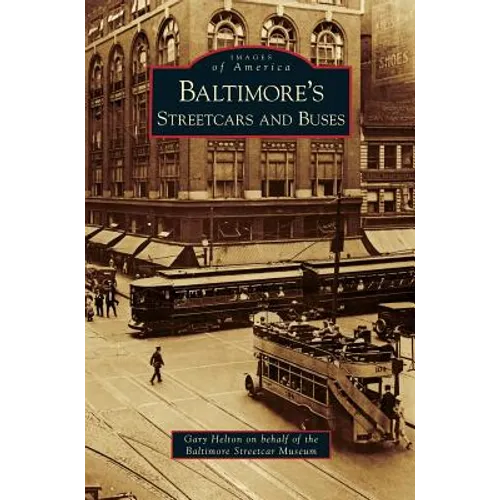
Baltimore's Streetcars and Buses - Hardcover

$34.54 USD
$34.54 USD
Sale Sold out
Shipping calculated at checkout.
In stock (100 units), ready to be shipped

Available Offers

Fastest Delivery Tomorrow With Vip DealOrder within 1 hr 8 mins.

Instant 10% Discount On HDFC Banks Credit/Debit Cards EMI and CreditCard

Secure checkout with
  • American Express
  • Apple Pay
  • Diners Club
  • Discover
  • Google Pay
  • Mastercard
  • PayPal
  • Shop Pay
  • Visa

Flight Range: Up to 1,000 meters (3,280 feet)

Maximum Speed: 45 kilometers per hour (28 miles per hour)

For all orders exceeding a value of 100USD shipping is offered for free.

Returns will be accepted for up to 10 days of Customer’s receipt or tracking number on unworn items. You, as a Customer, are obliged to inform us via email before you return the item.

Otherwise, standard shipping charges apply. Check out our delivery Terms & Conditions for more details.

View Product Details
Shopping cart
Product Product subtotal Quantity Price Product subtotal
Baltimore's Streetcars and Buses - Hardcover
$34.54/ea
$0.00
$34.54/ea $0.00

Product Description

by Gary Helton (Author)

In the 1850s, Baltimore's 170,000 residents had few options when it came to getting around town. Before the decade's end, however, the omnibus--an urban version of the stagecoach--emerged as Baltimore's first mass-transit vehicle. Horsecars followed, then cable cars, and ultimately electrically powered streetcars. Recognizing the need for cohesion, the city's myriad transit providers merged into a single operator. United Railways and Electric Company, incorporated in 1899, faced the unenviable task of integrating routes being served by inadequate, incompatible, and often obsolete equipment. Over the next seven decades, privately run mass transit in Baltimore survived bankruptcy, a name change, two world wars, the proliferation of private automobiles, a takeover by out-of-town interests, and a plethora of new vehicles. Arguably a unified system of privately operated mass transit was no closer to being a reality in 1970, when it reached the end of the line and was taken over by the state.


Number of Pages: 130
Dimensions: 0.38 x 9.61 x 6.69 IN
Publication Date: April 16, 2008
you might like
