Product Description
by Russell Olwell (Author)
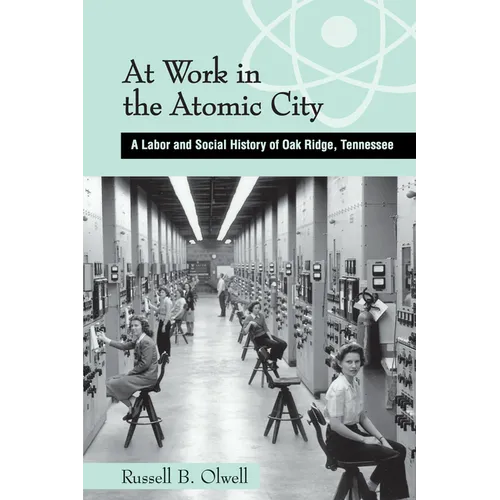
Founded during World War II, Oak Ridge, Tennessee, was a vital link in the U.S. military's atomic bomb assembly line-the site where scientists worked at a breakneck pace to turn tons of uranium into a few grams of the artificial element plutonium. To construct and operate the plants needed for this effort, thousands of workers, both skilled and unskilled, converged on the "city behind a fence" tucked between two ridges of sparsely populated farmland in the Tennessee hills.
At Work in the Atomic City explores the world of those workers and their efforts to form unions, create a community, and gain political rights over their city. It follows them from their arrival at Oak Ridge, to the places where they lived, and to their experiences in a dangerous and secretive workplace. Lured by promises of housing, plentiful work, and schooling for their children, they were often exposed to dangerous levels of radioactivity, harmful chemicals, and other hazards. Although scientists and doctors intended to protect workers, the pressure to produce materials for the bomb often overrode safety considerations. After the war, as the military sought to reduce services and jobs in Oak Ridge, workers organized unions at two plants to demand higher wages and job security. However, the new Taft-Hartley Act limited defense workers' ability to strike and thus curbed union influence. The book examines the ongoing debates over workers' rights at Oak Ridge-notably the controversy surrounding the new federal program intended to compensate workers and their families for injuries sustained on the job. Because of faulty record keeping at the facilities and confusion over exposure levels, many have been denied payment to this day. Drawing on extensive research into oral history collections, transcripts of government proceedings, and other primary sources, At Work in the Atomic City is the first detailed account of the workers who built and labored in the facilities that helped ensure the success of the Manhattan Project-a story known, heretofore, only in broad outline. Russell Olwell, an assistant professor of history at Eastern Michigan University, has published articles in ISIS, Tennessee Historical Quarterly, and Technology and Culture.Author Biography
Russell Olwell, an assistant professor of history at Eastern Michigan University, has published articles in ISIS, Tennessee Historical Quarterly, and Technology and Culture.
Number of Pages: 176
Dimensions: 0.6 x 8.9 x 5.9 IN
Illustrated: Yes
Publication Date: November 29, 2008