Skip to content
Welcome To Our Store.
100,000+ Products for Home, Medical, Office & Classroom Needs
Search
Skip to product information
1 of 1

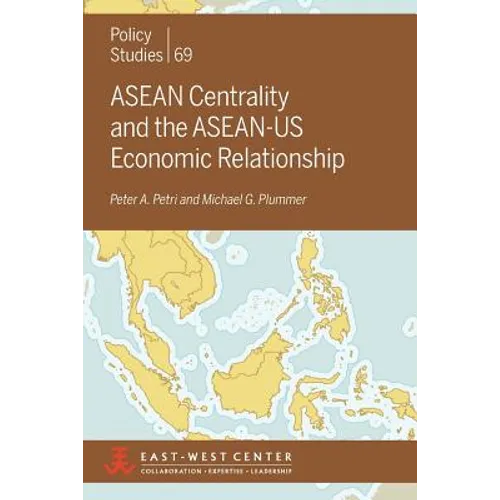
ASEAN Centrality and the ASEAN-Us Economic Relationship - Paperback

$10.80 USD
$10.80 USD
Sale Sold out
Shipping calculated at checkout.
In stock (100 units), ready to be shipped

Available Offers

Fast delivery available on most orders

Multiple secure payment options accepted

Secure checkout with
  • American Express
  • Apple Pay
  • Diners Club
  • Discover
  • Google Pay
  • Mastercard
  • PayPal
  • Shop Pay
  • Visa

Flight Range: Up to 1,000 meters (3,280 feet)

Maximum Speed: 45 kilometers per hour (28 miles per hour)

For all orders exceeding a value of 100USD shipping is offered for free.

Returns will be accepted for up to 10 days of Customer’s receipt or tracking number on unworn items. You, as a Customer, are obliged to inform us via email before you return the item.

Otherwise, standard shipping charges apply. Check out our delivery Terms & Conditions for more details.

View Product Details
Shopping cart
Product Product subtotal Quantity Price Product subtotal
ASEAN Centrality and the ASEAN-Us Economic Relationship - Paperback
$10.80/ea
$0.00
$10.80/ea $0.00

Product Description

by Peter a. Petri (Author), Michael G. Plummer (Author)

The Association of Southeast Asian Nations (ASEAN) is strategically significant because of its size, dynamism, and role in the Asian economic and security architectures. This paper examines how ASEAN seeks to strengthen these assets through "centrality" in intraregional and external policy decisions. It recommends a two-speed approach toward centrality in order to maximize regional incomes and benefit all member economies: first, selective engagement by ASEAN members in productive external partnerships and, second, vigorous policies to share gains across the region. This strategy has solid underpinnings in the Kemp-Wan theorem on trade agreements. It would warrant, for example, a Trans-Pacific Partnership (TPP) agreement with incomplete ASEAN membership, complemented with policies to extend gains across the region. The United States could support this framework by pursuing deep relations with some ASEAN members, while broadly assisting the region's development.


Number of Pages: 92
Dimensions: 0.19 x 9.21 x 6.14 IN
Publication Date: March 13, 2014
you might like
