


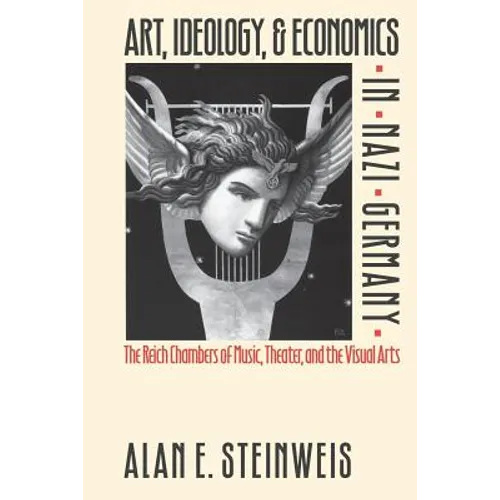
Product Description
by Alan E. Steinweis (Author)
From 1933 to 1945, the Reich Chamber of Culture exercised a profound influence over hundreds of thousands of German artists and entertainers. Alan Steinweis focuses on the fields of music, theater, and the visual arts in this first major study of Nazi cultural administration, examining a complex pattern of interaction among leading Nazi figures, German cultural functionaries, ordinary artists, and consumers of culture. Steinweis gives special attention to Nazi efforts to purge the arts of Jews and other so-called undesirables.
Steinweis describes the political, professional, and economic environment in which German artists were compelled to function and explains the structure of decision making, thus showing in whose interest cultural policies were formulated. He discusses such issues as insurance, minimum wage statutes, and certification guidelines, all of which were matters of high priority to the art professions before 1933 as well as after the Nazi seizure of power. By elucidating the economic and professional context of cultural life, Steinweis helps to explain the widespread acquiescence of German artists to artistic censorship and racial 'purification.' His work also sheds new light on the purge of Jews from German cultural life.
Back Jacket
From 1933 to 1945, the Reich Chamber of Culture exercised a profound influence over hundreds of thousands of German artists and entertainers. Subdivided into separate chambers for music, theater, the visual arts, literature, film, radio, and the press, this organization encompassed several hundred thousand professionals and influenced the activities of millions of amateur artists and musicians as well. Alan Steinweis focuses on the fields of music, theater, and the visual arts in this first major study of Nazi cultural administration, examining a complex pattern of interaction among leading Nazi figures, German cultural functionaries, ordinary artists, and consumers of culture. One of the most persistent generalizations to emerge from research on Nazi Germany is the notion of a German artistic and cultural establishment at the mercy of a totalitarian regime determined to mobilize the arts for its own ideological purposes. Steinweis argues that this generalization obscures a more complex reality. It overlooks continuities in the agenda of the German cultural establishment from the Weimar Republic through the Nazi period and presupposes a clearer distinction than actually existed between officialdom and the cultural elite, thereby overestimating the degree to which policy affecting artists originated outside the artistic world. Steinweis describes the political, professional, and economic environment in which German artists were compelled to function and explains the structure of decision making, showing in whose interest cultural policies were formulated. He discusses such issues as work creation, social insurance, minimum wage statutes, and certification guidelines, all of which werematters of high priority to the art professions before 1933 as well as after the Nazi seizure of power. By elucidating the economic and professional context of cultural life, Steinweis also contributes to an understanding of the response of German artists to cultural Gleichschaltung, or "coordination", and helps to explain the widespread acquiescence of German artists to artistic censorship and racial and political "purification".



