Skip to content
Welcome To Our Store.
100,000+ Products for Home, Medical, Office & Classroom Needs
Search
Skip to product information
1 of 1

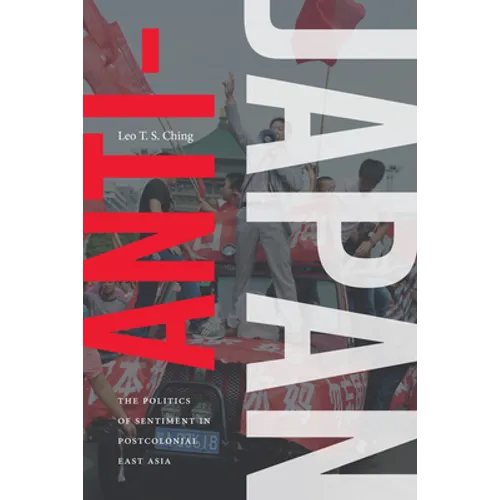
Anti-Japan: The Politics of Sentiment in Postcolonial East Asia - Paperback

$48.53 USD
$48.53 USD
Sale Sold out
Shipping calculated at checkout.
In stock (100 units), ready to be shipped

Available Offers

Fastest Delivery Tomorrow With Vip DealOrder within 1 hr 8 mins.

Instant 10% Discount On HDFC Banks Credit/Debit Cards EMI and CreditCard

Secure checkout with
  • American Express
  • Apple Pay
  • Diners Club
  • Discover
  • Google Pay
  • Mastercard
  • PayPal
  • Shop Pay
  • Visa

Flight Range: Up to 1,000 meters (3,280 feet)

Maximum Speed: 45 kilometers per hour (28 miles per hour)

For all orders exceeding a value of 100USD shipping is offered for free.

Returns will be accepted for up to 10 days of Customer’s receipt or tracking number on unworn items. You, as a Customer, are obliged to inform us via email before you return the item.

Otherwise, standard shipping charges apply. Check out our delivery Terms & Conditions for more details.

View Product Details
Shopping cart
Product Product subtotal Quantity Price Product subtotal
Anti-Japan: The Politics of Sentiment in Postcolonial East Asia - Paperback
$48.53/ea
$0.00
$48.53/ea $0.00

Product Description

by Leo T. S. Ching (Author)

Although the Japanese empire rapidly dissolved following the end of World War II, the memories, mourning, and trauma of the nation's imperial exploits continue to haunt Korea, China, and Taiwan. In Anti-Japan Leo T. S. Ching traces the complex dynamics that shape persisting negative attitudes toward Japan throughout East Asia. Drawing on a mix of literature, film, testimonies, and popular culture, Ching shows how anti-Japanism stems from the failed efforts at decolonization and reconciliation, the Cold War and the ongoing U.S. military presence, and shifting geopolitical and economic conditions in the region. At the same time, pro-Japan sentiments in Taiwan reveal a Taiwanese desire to recoup that which was lost after the Japanese empire fell. Anti-Japanism, Ching contends, is less about Japan itself than it is about the real and imagined relationships between it and China, Korea, and Taiwan. Advocating for forms of healing that do not depend on state-based diplomacy, Ching suggests that reconciliation requires that Japan acknowledge and take responsibility for its imperial history.

Author Biography

Leo T. S. Ching is Associate Professor of Japanese and East Asian Cultural Studies at Duke University and author of Becoming "Japanese" Colonial Taiwan and the Politics of Identity Formation.


Number of Pages: 176
Dimensions: 0.6 x 8.8 x 6 IN
Illustrated: Yes
Publication Date: June 28, 2019
you might like
