


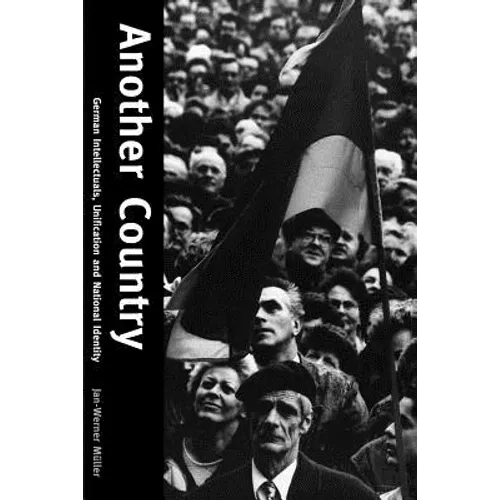
Product Description
by Jan-Werner Müller (Author)
How did German intellectuals react to unification and how have they conceived the country's national identity and its new international position? This important book not only examines changing notions of nationhood and their complicated relationship to the Nazi past but also charts the wider history of the development of German political thought since World War II--while critically reflecting on some of the continuing blind spots among German writers and thinkers.
Jan-Werner Müller explains why many intellectuals reacted so defensively to unification and why unification plunged the Left in particular into a major crisis that is yet to be overcome. He analyzes the responses of Günter Grass, Jürgen Habermas, and others of the so-called skeptical generation, who broke with the tradition of the illiberal interwar intellectuals and reinvented themselves as a "democratic elite" who sought to transform political culture after the war--and tried to do so again after 1989. He discusses the German idea of "constitutional patriotism" as well as the antinationalism of the "generation of 1968," and provides the first full-scale analysis of Germany's "New Right." Written clearly and elegantly, the book assesses the acrimonious debates about the future of the nation-state and public memory in Germany and offers more general reflections on the role intellectuals can play in post-totalitarian societies.
Number of Pages: 322
Dimensions: 0.67 x 9.21 x 6.14 IN
Publication Date: October 01, 2000