Product Description
by James W. Penn Jr. (Author)
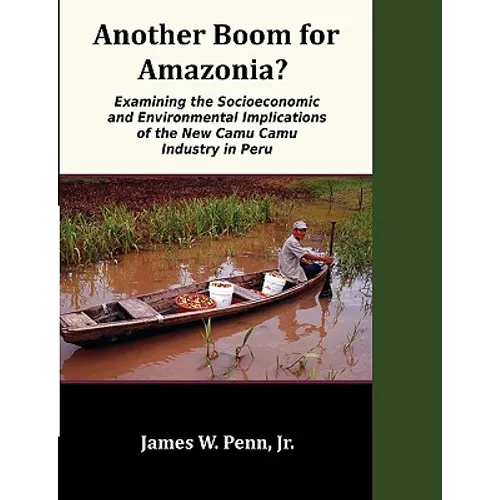
This study examines the socioeconomic and environmental implications of the new camu camu industry in Peru. Camu camu (Myrciaria dubia) is a small tree native to wetlands of the Amazon basin. It is especially abundant in Peruvian Amazonia. The high vitamin-C content of the fruit has generated interest in exporting camu camu products from Amazonia to more-developed countries. The government of Peru has been actively promoting this new extractive industry, as well as the planting of camu camu in rural areas. Non-governmental development organizations and private industry are now actively involved with camu camu projects and enterprises. In Peru, enthusiasm for this native species is high, because camu camu is expected to provide a much-needed and sustainable economic boost for the region. However, many questions about the environmental implications and socioeconomic impacts of the camu camu export industry need to be answered in order to understand its ecological and economic viability, and its effects on business and in rural communities. Findings indicate that camu camu has provided significantly more income to rural residents than is provided by the traditional boom and bust economies of Amazonia. Households who adopted camu camu as a new crop in their floodplain agroforestry systems farmed significantly more floodplain land than non-adopters, and were especially adept at experimenting with new innovations. Lack of agricultural credit is a major constraint to adopting camu camu as a new crop in Peru. Geographic isolation and the location of processing facilities in relation to fruit harvests present major obstacles to the economic viability of the new industry. Camu camu was found to be cultivated with a higher diversity of annual crops than is typical in floodplain fields of the region. Extraction of camu camu fruits from the wild does not appear to have a negative environmental impact, at least in the initial years of the industry. This non-timber forest product in the process of domestication can support a viable industry in the Peruvian Amazon, if agricultural extension methods and marketing channels are improved.