Skip to content
Welcome To Our Store.
100,000+ Products for Home, Medical, Office & Classroom Needs
Search
Skip to product information
1 of 1

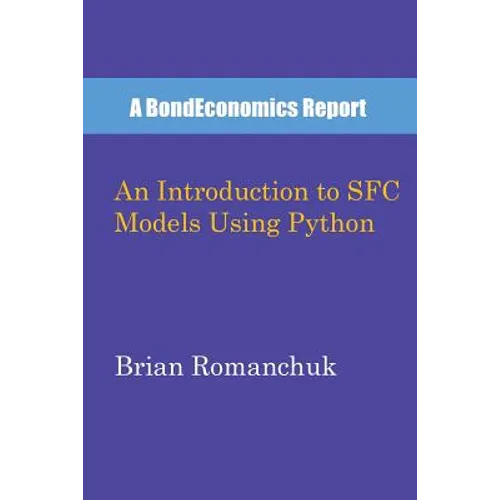
An Introduction to SFC Models Using Python - Paperback

$16.13 USD
$16.13 USD
Sale Sold out
Shipping calculated at checkout.
In stock (100 units), ready to be shipped

Available Offers

Fast delivery available on most orders

Multiple secure payment options accepted

Secure checkout with
  • American Express
  • Apple Pay
  • Diners Club
  • Discover
  • Google Pay
  • Mastercard
  • PayPal
  • Shop Pay
  • Visa

Flight Range: Up to 1,000 meters (3,280 feet)

Maximum Speed: 45 kilometers per hour (28 miles per hour)

For all orders exceeding a value of 100USD shipping is offered for free.

Returns will be accepted for up to 10 days of Customer’s receipt or tracking number on unworn items. You, as a Customer, are obliged to inform us via email before you return the item.

Otherwise, standard shipping charges apply. Check out our delivery Terms & Conditions for more details.

View Product Details
Shopping cart
Product Product subtotal Quantity Price Product subtotal
An Introduction to SFC Models Using Python - Paperback
$16.13/ea
$0.00
$16.13/ea $0.00

Product Description

by Brian Romanchuk (Author)

Stock-Flow Consistent (SFC) models are a preferred way to present economic models in the post-Keynesian tradition. This book gives an overview of the sfc_models package, which implements SFC models in Python. The approach is novel, in that the user only specifies the high-level parameters of the economic model, and the framework generates and solves the implied equations. The framework is open source, and is aimed at both researchers and those with less experience with economic models. This book explains to researchers how to extend the sfc_models framework to implement advanced models. For those who are new to SFC models, the book explains some of the basic principles behind these models, and it is possible for the reader to run example code (which is packaged with the software online) to examine the model output.

Number of Pages: 144
Dimensions: 0.31 x 9 x 6 IN
Publication Date: November 13, 2017
you might like