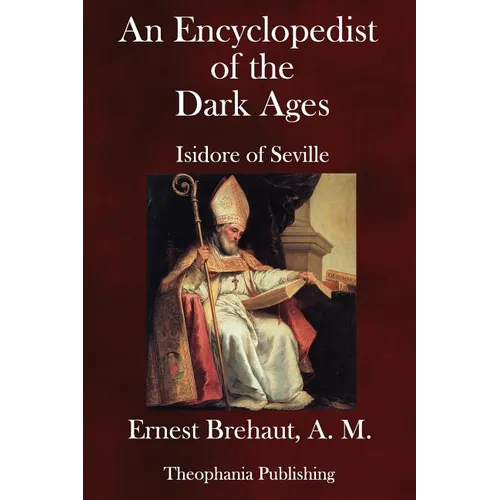
Product Description
by Ernest Brehaut a. M. (Author)
THE development of European thought as we know it from the dawn of history down to the Dark Ages is marked by the successive secularization and de-secularization of knowledge.1 From the beginning Greek secular science can be seen painfully disengaging itself from superstition. For some centuries it succeeded in maintaining its separate existence and made wonderful advances; then it was obliged to give way before a new and stronger set of superstitions which may be roughly called Oriental. In the following centuries all those branches of thought which had separated themselves from superstition again returned completely to its cover; knowledge was completely de-secularized, the final influence in this process being the victory of Neoplatonized Christianity.2 The sciences disappeared as living realities, their names and a few lifeless and scattered fragments being all that remained. They did not reappear as realities until the medieval period ended. This process of de-secularization was marked by two leading characteristics; on the one hand, by the loss of that contact with physical reality through systematic observation which alone had given life to Greek natural science, and on the other, by a concentration of attention upon what were believed to be the superior realities of the spiritual world. The consideration of these latter became so intense, so detailed and systematic, that there was little energy left among thinking men for anything else.