Product Description
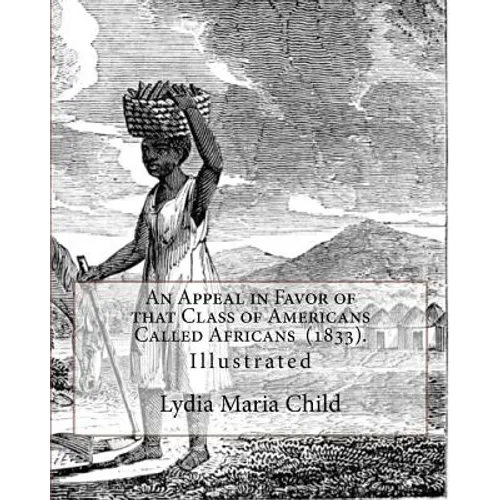
by Lydia Maria Child (Author)
Lydia Maria Francis Child (born Lydia Maria Francis) (February 11, 1802 - October 20, 1880), was an American abolitionist, women's rights activist, Native American rights activist, novelist, journalist, and opponent of American expansionism. Her journals, both fiction and domestic manuals, reached wide audiences from the 1820s through the 1850s. At times she shocked her audience as she tried to take on issues of both male dominance and white supremacy in some of her stories. Despite these challenges, Child may be most remembered for her poem "Over the River and Through the Wood." Her grandparents' house, which she wrote about visiting, was restored by Tufts University in 1976 and stands near the Mystic River on South Street, in Medford, Massachusetts. Early life and education: She was born Lydia Maria Francis in Medford, Massachusetts, on February 11, 1802, to Susannah (n e Rand) and Convers Francis. Her older brother, Convers Francis, was educated at Harvard College and Seminary, and became a Unitarian minister. Child received her education at a local dame school and later at a women's seminary. Upon the death of her mother, she went to live with her older sister in Maine, where she studied to be a teacher. During this time, her brother Convers, by then a Unitarian minister, saw to his younger sister's education in literary masters such as Homer and Milton. Francis chanced to read an article in the North American Review discussing the field offered to the novelist by early New England history. Although she had never thought of becoming an author, she immediately wrote the first chapter of her novel Hobomok. Encouraged by her brother's commendation, she finished it in six weeks and had it published. From this time until her death, she wrote continually. Francis taught for one year in a seminary in Medford, and in 1824 started a private school in Watertown, Massachusetts. In 1826, she founded the Juvenile Miscellany, the first monthly periodical for children published in the United States, and supervised its publication for eight years. In 1828, she married David Lee Child and moved to Boston.