


Product Description
by Howard G. Wilshire (Author), Jane E. Nielson (Author), Richard W. Hazlett (Author)
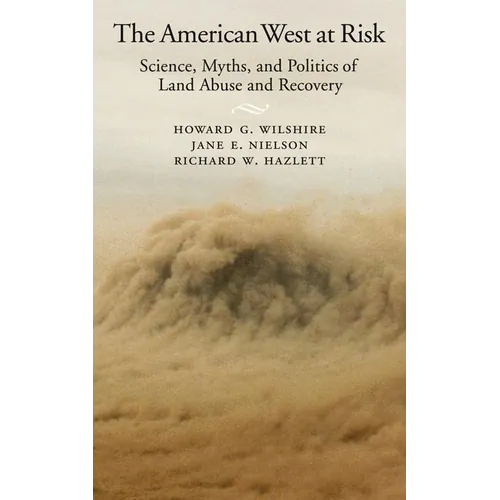
The American West at Risk summarizes the dominant human-generated environmental challenges in the 11 contiguous arid western United States - America's legendary, even mythical, frontier. When discovered by European explorers and later settlers, the west boasted rich soils, bountiful fisheries, immense, dense forests, sparkling streams, untapped ore deposits, and oil bonanzas. It now faces depletion of many of these resources, and potentially serious threats to its few "renewable" resources.
The importance of this story is that preserving lands has a central role for protecting air and water quality, and water supplies--and all support a healthy living environment. The idea that all life on earth is connected in a great chain of being, and that all life is connected to the physical earth in many obvious and subtle ways, is not some new-age fad, it is scientifically demonstrable. An understanding of earth processes, and the significance of their biological connections, is critical in shaping societal values so that national land use policies will conserve the earth and avoid the worst impacts of natural processes. These connections inevitably lead science into the murkier realms of political controversy and bureaucratic stasis. Most of the chapters in The American West at Risk focus on a human land use or activity that depletes resources and degrades environmental integrity of this resource-rich, but tender and slow-to-heal, western U.S.
The activities include forest clearing for many purposes; farming and grazing; mining for aggregate, metals, and other materials; energy extraction and use; military training and weapons manufacturing and testing; road and utility transmission corridors; recreation; urbanization; and disposing of the wastes generated by everything that we do. We focus on how our land-degrading activities are connected to natural earth processes, which act to accelerate and spread the damages we inflict on the land.
Visit www.theamericanwestatrisk.com to learn more about the book and its authors.
Author Biography
Howard G. Wilshire was a U. S. Geological Survey research geologist for thirty-five years and now is Board Chairman of Public Employees for Environmental Responsibility.
Jane E. Nielson was a U. S. Geological Survey research geologist for twenty-five years and now is President of the Sebastopol Water Information Group. Richard W. Hazlett is Professor of Geology and the coordinator of the Environmental Analysis Program at Pomona College.


