


Product Description
by Robert H. Keller (Author), Michael F. Turek (Author)
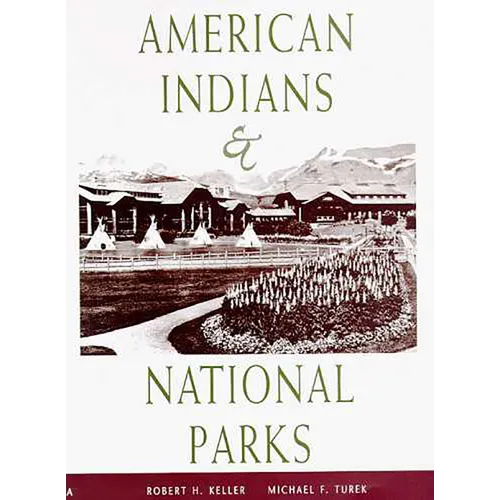
Many national parks and monuments tell unique stories of the struggle between the rights of native peoples and the wants of the dominant society. These stories involve our greatest parks--Yosemite, Yellowstone, Mesa Verde, Glacier, the Grand Canyon, Olympic, Everglades--as well as less celebrated parks elsewhere. In American Indians and National Parks, authors Robert Keller and Michael Turek relate these untold tales of conflict and collaboration. American Indians and National Parks details specific relationships between native peoples and national parks, including land claims, hunting rights, craft sales, cultural interpretation, sacred sites, disposition of cultural artifacts, entrance fees, dams, tourism promotion, water rights, and assistance to tribal parks. Beginning with a historical account of Yosemite and Yellowstone, American Indians and National Parks reveals how the creation of the two oldest parks affected native peoples and set a pattern for the century to follow. Keller and Turek examine the evolution of federal policies toward land preservation and explore provocative issues surrounding park/Indian relations. When has the National Park Service changed its policies and attitudes toward Indian tribes, and why? How have environmental organizations reacted when native demands, such as those of the Havasupai over land claims in the Grand Canyon, seem to threaten a national park? How has the Park Service dealt with native claims to hunting and fishing rights in Glacier, Olympic, and the Everglades? While investigating such questions, the authors traveled extensively in national parks and conducted over 200 interviews with Native Americans, environmentalists, park rangers, and politicians. They meticulously researched materials in archives and libraries, assembling a rich collection of case studies ranging from the 19th century to the present. In American Indians and National Parks, Keller and Turek tackle a significant and complicated subject for the first time, presenting a balanced and detailed account of the Native-American/national-park drama. This book will prove to be an invaluable resource for policymakers, conservationists, historians, park visitors, and others who are concerned about preserving both cultural and natural resources.
Front Jacket
Many national parks and monuments tell unique stories of the struggle between the rights of native peoples and the wants of the dominant society. These stories involve our greatest parks--Yosemite, Yellowstone, Mesa Verde, Glacier, the Grand Canyon, Olympic, Everglades--as well as less celebrated parks elsewhere. In "American Indians and National Parks," authors Robert Keller and Michael Turek relate these untold tales of conflict and collaboration. American Indians and National Parks details specific relationships between native peoples and national parks, including land claims, hunting rights, craft sales, cultural interpretation, sacred sites, disposition of cultural artifacts, entrance fees, dams, tourism promotion, water rights, and assistance to tribal parks. Beginning with a historical account of Yosemite and Yellowstone, "American Indians and National Parks" reveals how the creation of the two oldest parks affected native peoples and set a pattern for the century to follow. Keller and Turek examine the evolution of federal policies toward land preservation and explore provocative issues surrounding park/Indian relations. When has the National Park Service changed its policies and attitudes toward Indian tribes, and why? How have environmental organizations reacted when native demands, such as those of the Havasupai over land claims in the Grand Canyon, seem to threaten a national park? How has the Park Service dealt with native claims to hunting and fishing rights in Glacier, Olympic, and the Everglades? While investigating such questions, the authors traveled extensively in national parks and conducted over 200 interviews with Native Americans, environmentalists, park rangers, and politicians. They meticulously researched materials in archives and libraries, assembling a rich collection of case studies ranging from the 19th century to the present. In "American Indians and National Parks," Keller and Turek tackle a significant and complicated subject for the first time, presenting a balanced and detailed account of the Native-American/national-park drama. This book will prove to be an invaluable resource for policymakers, conservationists, historians, park visitors, and others who are concerned about preserving both cultural and natural resources.
Author Biography
Robert H. Keller is a retired professor of history, formerly with Western Washington University, where he taught federal Indian policy and law. He lives in Bellingham.



