


Product Description
by Adria L. Imada (Author)
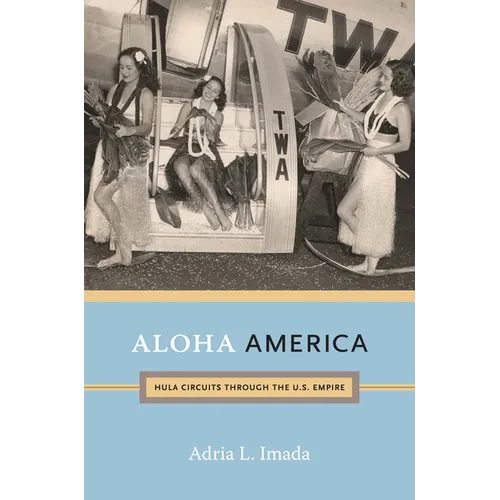
Aloha America reveals the role of hula in legitimating U.S. imperial ambitions in Hawai'i. Hula performers began touring throughout the continental United States and Europe in the late nineteenth century. These "hula circuits" introduced hula, and Hawaiians, to U.S. audiences, establishing an "imagined intimacy," a powerful fantasy that enabled Americans to possess their colony physically and symbolically. Meanwhile, in the early years of American imperialism in the Pacific, touring hula performers incorporated veiled critiques of U.S. expansionism into their productions.
At vaudeville theaters, international expositions, commercial nightclubs, and military bases, Hawaiian women acted as ambassadors of aloha, enabling Americans to imagine Hawai'i as feminine and benign, and the relation between colonizer and colonized as mutually desired. By the 1930s, Hawaiian culture, particularly its music and hula, had enormous promotional value. In the 1940s, thousands of U.S. soldiers and military personnel in Hawai'i were entertained by hula performances, many of which were filmed by military photographers. Yet, as Adria L. Imada shows, Hawaiians also used hula as a means of cultural survival and countercolonial political praxis. In Aloha America, Imada focuses on the years between the 1890s and the 1960s, examining little-known performances and films before turning to the present-day reappropriation of hula by the Hawaiian self-determination movement.
Author Biography
Adria L. Imada is Associate Professor of History at the University of California, Irvine.



