Product Description
by Richard Nelson (Author)
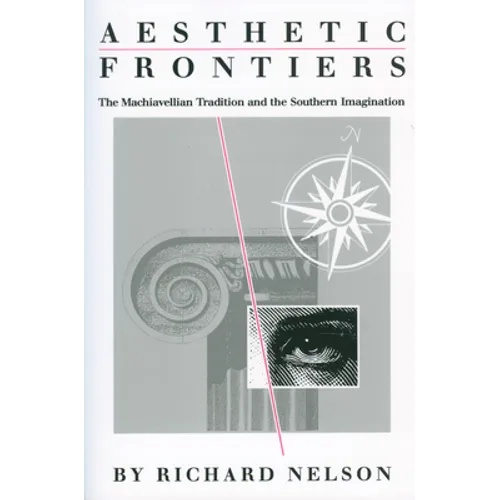
Aesthetic Frontiers: The Machiavellian Tradition and the Southern Imagination by Richard Nelson A re-evaluation of the literary and historical origins and implications of the Southern Literary Renaissance and its pivotal role in the transformation of Anglo-American political culture in the twentieth century. Opening a new vista for the study of southern literature and southern history, this provocative assessment of political and literary currents in the New South sees them as flowing from the mainstream of Machiavellian tradition. Richard Nelson offers a new interpretation of the transformation of Anglo-American intellectual and aesthetic culture since 1890. He shows that southern intellectuals-aesthetic theorists, literary critics, historians, and political thinkers-confronted head on the tensions Machiavelli observed between power and value, creativity and tradition, and romanticism and realism while seeking a cultural ideal that balances politics and aesthetics. The American South, the most militant hotbed of republicanism in the antebellum period, remained at the center of the effort to undergo revision after 1890. In the work of the New Agrarians and the New Critics Nelson sees intellectuals of the South attempting to gain aesthetic distance from a rejected heroic tradition of republicanism while at the same time reinforcing many of its ideals. He shows that literary devices such as irony form a powerful aesthetic formula in the work of such figures as Frederick Jackson Turner, Tom Watson, Thomas Dixon, Jr., W. J. Cash, C. Vann Woodward, Langston Hughes, Allen Tate, and Robert Penn Warren. Each of these, he shows, explored the inner contradictions of a Machiavellian tradition, with its desire to preserve both authority and innovation. Confronting a series of crises beginning with the perceived loss of the frontier in the 1890s and culminating in the complete separation of politics and aesthetics during World War II, these agrarian critics, as Nelson perceives them, sought to transform political decay into aesthetic vitality. By drawing upon and transforming formulas like the southern romance, the jeremiad, and the metaphor of the frontier, these thinkers intuitively drew upon the Machiavellian aesthetic of reinventing the heroic ideal in order to preserve political authority that has lost its legitimacy. Richard Nelson is a professor of history at the University of Maine at Machias.
Front Jacket
Opening a new vista for the study of southern literature and southern history, this provocative assessment of political and literary currents in the New South sees them as flowing from the mainstream of Machiavellian tradition