Product Description
by Richard Barrett (Foreword by), Stefano Petti (Author), Giovanna D'Alessio (Author)
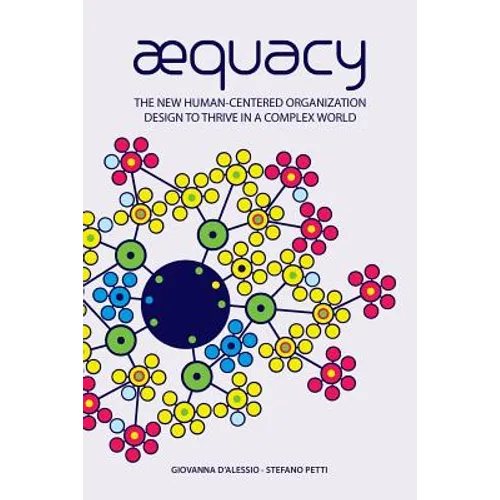
In the last few decades, leaders have been witnessing increasing complexity and an exponential rate of change from the outside and they have experienced a number of internal challenges hindering the performance of their organizations: among these, we find a silo mentality, rigidity, stultifying bureaucracy, an excess of systems and processes, and an outdated command & control management style. These challenges are common to all corporations, across geography, industries and size. We have considered how corporations have tried to solve their organizational issues. In the last 30 years we have seen a number of fancy corporate initiatives, including Total Quality programs, moving on to a matrix structure, Six Sigma interventions, Lean initiatives, leadership development programs, moving on to flatter organizations and more recently Smart Working. The results of these initiatives generally fall far short of reaching their full potential and after a few years the company is ready to move on to its next transformation effort. The reason is that all these initiatives are implemented within the same mindset that created the problems in the first place. Furthermore, these approaches are driven by a mechanistic approach to problem-solving: they focus on the single broken or malfunctioning part of the organization, without considering the interrelation and dynamics among the various parts and without addressing the underlying cause of the problem. Hierarchical structures and systems generate and reinforce those same behaviors that the organization would like to dismantle. Even in flat pyramids, the mere presence of subordination (a few leaders who can make decisions which the rest of the employees are expected to execute) and the presence of strict control mechanisms create typical dysfunctional dynamics and behaviors that operate on a system level, and are generally unacknowledged. The idea that the structure and the systems of an organization shape people's behavior is not new. Chris Argyris, Professor Emeritus at Harvard Business School, was among the first to argue that a rigid hierarchical structure paves the way for a shift in behavior from active toward passive, from self-management toward dependency, from equal to subordinate. Other researchers suggest that hierarchy causes conservatism, conformity, domination of individuals, low output, low morale and decreased innovation. Companies cannot expect to overcome their challenges without questioning the whole idea of subordination. Our research shows that a good portion of both top executives and employees desire a radical change in the way the organizations work: they imagine a purpose-driven business, in which self-organizing teams, decentralized decision-making based on values and principles, and transparency are the main keys to becoming a successful organization. We propose a radical shift to a hierarchy-free organization. AEquacy is a human-centered organizational design and operating system that changes the paradigm of the traditional, hierarchical organization, overcoming its limits and paving the way to greater innovation, collaboration and performance. AEquacy can be envisioned as a radial, equalitarian structure of self-organizing, peer-coordinated teams. Different pre-defined types of teams and specific roles within each team keep the system in balance while unleashing the true potential of teams and individuals. In an aequal organization people can perform at their best because they have total control over their work, clarity about the organizational direction and access to all information to make the best decisions. The book presents: - AEquacy, a hierarchy-free, peer-coordinated, radial structure of self-organizing teams; - The AEquacy framework of operating principles; - The AEquacy implementation model.
Author Biography
Giovanna D'Alessio is a partner at Asterys, a global organizational development firm, a former executive in the corporate setting and past President of ICF Global (International Coach Federation). She is the author of the book "Personal Mastery. The Path to Transformative Leadership" and a TEDx speaker. Stefano Petti is a partner at Asterys and a former manager in multinational settings. He is the co-author of the Harvard Business Review articles "How Your State of Mind Affects your Performance", "4 Steps to Dispel a Bad Mood", "Getting in the Right State of Mind for Vacation" and "A Simple Way to Combat Chronic Stress". Over the last 16 years, Giovanna and Stefano have worked with the leadership teams of dozens of multinational organizations in different countries to implement cultural transformation, leadership development and high-performing team programs.