Skip to content
Welcome To Our Store.
100,000+ Products for Home, Medical, Office & Classroom Needs
Search
Skip to product information
1 of 1

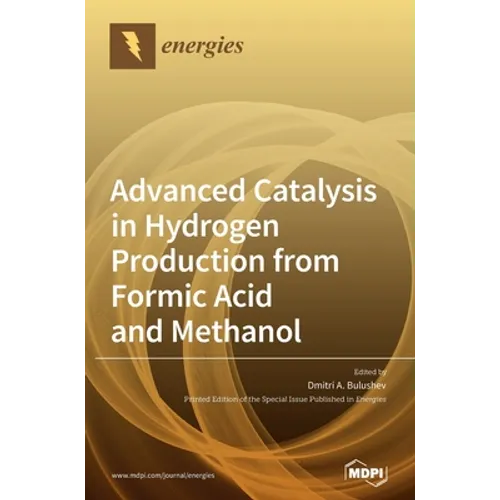
Advanced Catalysis in Hydrogen Production from Formic Acid and Methanol - Hardcover

$54.04 USD
$54.04 USD
Sale Sold out
Shipping calculated at checkout.
In stock (100 units), ready to be shipped

Available Offers

Fastest Delivery Tomorrow With Vip DealOrder within 1 hr 8 mins.

Instant 10% Discount On HDFC Banks Credit/Debit Cards EMI and CreditCard

Secure checkout with
  • American Express
  • Apple Pay
  • Diners Club
  • Discover
  • Google Pay
  • Mastercard
  • PayPal
  • Shop Pay
  • Visa

Flight Range: Up to 1,000 meters (3,280 feet)

Maximum Speed: 45 kilometers per hour (28 miles per hour)

For all orders exceeding a value of 100USD shipping is offered for free.

Returns will be accepted for up to 10 days of Customer’s receipt or tracking number on unworn items. You, as a Customer, are obliged to inform us via email before you return the item.

Otherwise, standard shipping charges apply. Check out our delivery Terms & Conditions for more details.

View Product Details
Shopping cart
Product Product subtotal Quantity Price Product subtotal
Advanced Catalysis in Hydrogen Production from Formic Acid and Methanol - Hardcover
$54.04/ea
$0.00
$54.04/ea $0.00

Product Description

by Dmitri A. Bulushev (Guest Editor)

This Special Issue is related to studies of the hydrogen production from formic acid decomposition. It is based on five research papers and two reviews. The reviews discuss the liquid phase formic acid decomposition over bimetallic (PdAg), molecular (Ru, Ir, Fe, Co), and heterogenized molecular catalysts. The gas-phase reaction is studied over highly dispersed Pd, Pt, Au, Cu, and Ni supported catalysts. It is shown that the nature of the catalyst's support plays an important role for the reaction. Thus, N-doping of the carbon support provides a significant promotional effect. One of the reasons for the high activity of the N-doped catalysts is the formation of single-atom active sites stabilized by pyridinic N species present in the support. It is demonstrated that carbon materials can be N-doped in different ways. It can be performed either directly from N-containing compounds during the carbon synthesis or by a post-synthetic deposition of N-containing compounds on the carbon support with known properties. The Issue could be useful for specialists in catalysis and nanomaterials as well as for graduate students studying chemistry and chemical engineering. The reported results can be applied for development of catalysts for the hydrogen production from different liquid organic hydrogen carriers.

Number of Pages: 122
Dimensions: 0.5 x 9.61 x 6.69 IN
Publication Date: June 18, 2020
you might like