Product Description
by Federal Aviation Administration (Author)
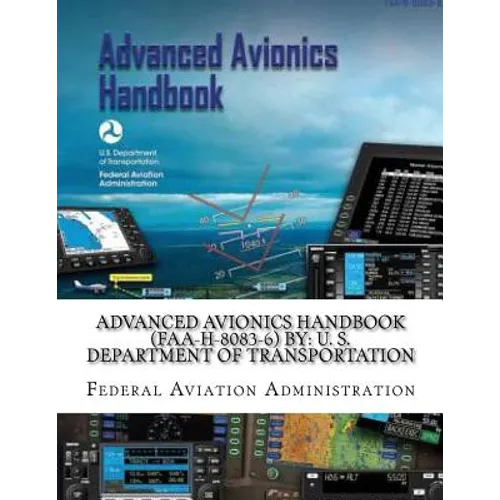
The Advanced Avionics Handbook is a new publication designed to provide general aviation users with comprehensive information on advanced avionics equipment available in technically advanced aircraft. This handbook introduces the pilot to flight operations in aircraft with the latest integrated "glass cockpit" advanced avionics systems. This handbook is designed as a technical reference for pilots who operate aircraft with advanced avionics systems. Whether flying a conventional aircraft that features a global positioning system (GPS) navigation receiver or a new aircraft with the latest integrated "glass cockpit" advanced avionics system, you should find this handbook helpful in getting started. The arrival of new technology to general aviation aircraft has generated noticeable changes in three areas: information, automation, and options. Pilots now have an unprecedented amount of information available at their fingertips. Electronic flight instruments use innovative techniques to determine aircraft attitude, speed, and altitude, presenting a wealth of information in one or more integrated presentations. A suite of cockpit information systems provides pilots with data about aircraft position, planned route, engine health and performance, as well as surrounding weather, traffic, and terrain. Advanced avionics systems can automatically perform many tasks that pilots and navigators previously did by hand. For example, an area navigation (RNAV) or flight management system (FMS) unit accepts a list of points that define a flight route, and automatically performs most of the course, distance, time, and fuel calculations. Once en route, the FMS or RNAV unit can continually track the position of the aircraft with respect to the flight route, and display the course, time, and distance remaining to each point along the planned route. An autopilot is capable of automatically steering the aircraft along the route that has been entered in the FMS or RNAV system. Advanced avionics perform many functions and replace the navigator and pilot in most procedures. However, with the possibility of failure in any given system, the pilot must be able to perform the necessary functions in the event of an equipment failure. Pilot ability to perform in the event of equipment failure(s) means remaining current and proficient in accomplishing the manual tasks, maintaining control of the aircraft manually (referring only to standby or backup instrumentation), and adhering to the air traffic control (ATC) clearance received or requested. Pilots of modern advanced avionics aircraft must learn and practice backup procedures to maintain their skills and knowledge.