Skip to content
Save 5% on your next order with code PREMIUM5!
100,000+ Products for Home, Medical, Office & Classroom Needs
Search
Skip to product information
1 of 1

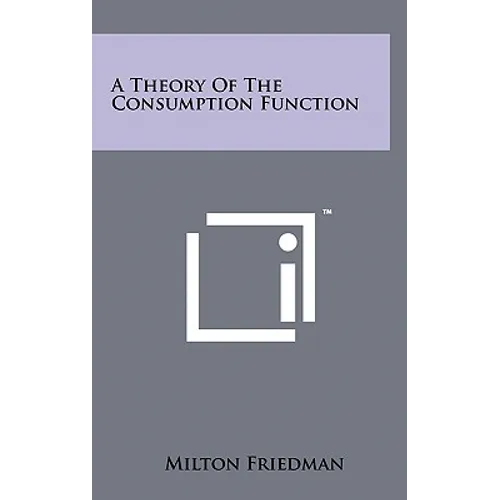
A Theory Of The Consumption Function - Hardcover

$63.29 USD
$63.29 USD
Sale Sold out
Shipping calculated at checkout.
In stock (100 units), ready to be shipped

Available Offers

Fast delivery available on most orders

Multiple secure payment options accepted

Secure checkout with
  • American Express
  • Apple Pay
  • Diners Club
  • Discover
  • Google Pay
  • Mastercard
  • PayPal
  • Shop Pay
  • Visa

Flight Range: Up to 1,000 meters (3,280 feet)

Maximum Speed: 45 kilometers per hour (28 miles per hour)

For all orders exceeding a value of 100USD shipping is offered for free.

Returns will be accepted for up to 10 days of Customer’s receipt or tracking number on unworn items. You, as a Customer, are obliged to inform us via email before you return the item.

Otherwise, standard shipping charges apply. Check out our delivery Terms & Conditions for more details.

View Product Details
Shopping cart
Product Product subtotal Quantity Price Product subtotal
A Theory Of The Consumption Function - Hardcover
$63.29/ea
$0.00
$63.29/ea $0.00

Product Description

by Milton Friedman (Author)

What is the exact nature of the consumption function? Can this term be defined so that it will be consistent with empirical evidence and a valid instrument in the hands of future economic researchers and policy makers? In this volume a distinguished American economist presents a new theory of the consumption function, tests it against extensive statistical J material and suggests some of its significant implications.

Central to the new theory is its sharp distinction between two concepts of income, measured income, or that which is recorded for a particular period, and permanent income, a longer-period concept in terms of which consumers decide how much to spend and how much to save. Milton Friedman suggests that the total amount spent on consumption is on the average the same fraction of permanent income, regardless of the size of permanent income. The magnitude of the fraction depends on variables such as interest rate, degree of uncertainty relating to occupation, ratio of wealth to income, family size, and so on.

The hypothesis is shown to be consistent with budget studies and time series data, and some of its far-reaching implications are explored in the final chapter.


Number of Pages: 258
Dimensions: 0.75 x 9.02 x 5.98 IN
Publication Date: April 02, 2011
you might like