


Product Description
by Anthony Milner (Author)
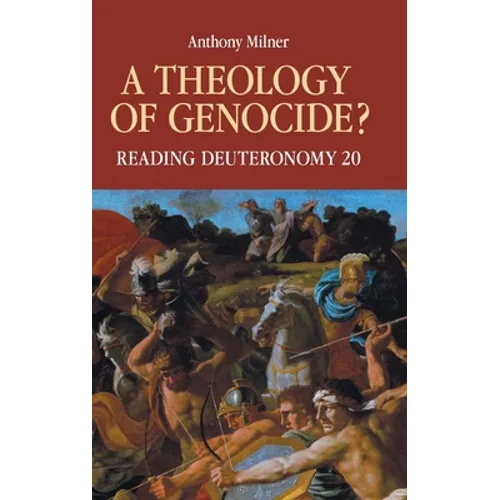
The twentieth century has been described, not without justification, as the 'Century of Genocide'. Whole groups of people have been targeted for slaughter because of their ethnicity or religion, from Armenia to Rwanda. Against this background, how are we to understand the command in Deuteronomy to 'not leave alive anything that breathes' of the Canaanite nations present in the Promised Land (Deut 20.17-18)?
In this penetrating study, Milner begins by asking if this passage has been used to justify genocidal violence (it has, but not nearly as much as some have thought). He then considers how such texts have been understood, demonstrating that most readers have taken the passage allegorically, as a metaphor for the interior struggle against sin.
That may seem to be too easy a solution. Yet, looking at modern historical and literary analyses of the text, Milner shows that the original audiences of this passage would also have taken it symbolically, since they lived many generations after the 'narrated time' of the Conquest when no Canaanites populations remained to be exterminated. Further, the narrative itself demonstrates that the 'military option' was a complete failure, and does not commend it to the audience of the text.
Milner argues that God no more commanded genocide than he wandered about in the evening breeze in Eden (Gen 3:8) or encouraged Satan to persecute and tempt Job (Job 1-2). This is by no means a new insight, he says, tracing it back to early Christian theologians, particularly Origen and Gregory of Nyssa, who argued that passages not 'worthy of God' should not be interpreted literally.