


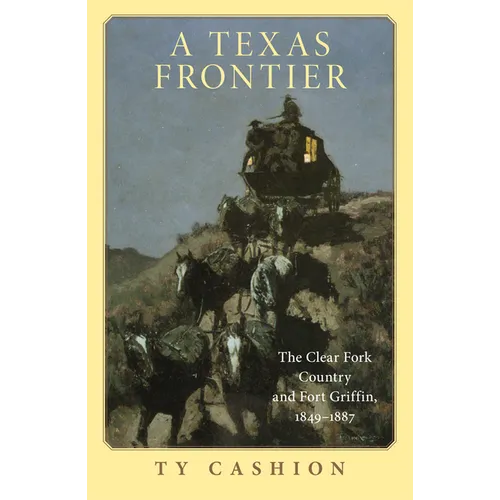
Product Description
by Ty Cashion (Author)
In a Texas Frontier: The Clear Fork Country and Fort Griffin, 1849-1887, Ty Cashion surveys the formative development of northwest Texas where the Clear Fork of the Brazos cuts a path between the timbered region and the treeless plains beyond. Despite the unfamiliar and often harsh environment, the first pioneers--mainly southern stock raisers--persisted through conflicts with Plains Indians, the Civil War, Reconstruction, outlawry, rapid settlement, and diversification to form a ranching-based social and economic way of life. The process turned a largely southern people into westerners.
Others helped shape the history of the Clear Fork country as well. Notable among them were Anglo men and women--some of them earnest settlers, others unscrupulous opportunists--who followed the first pioneers; Indians of various tribes who claimed the land as their own or who were forcibly settled there by the white government; and African Americans, both former slaves and buffalo soldiers and their families, who remained on the land after their terms of enlistment expired.
A dominant theme in Cashion's depiction of the Clear Fork country is that from its earliest days boom-and-bust cycles have characterized the region as a result of the land's fickle nature, the policies of various governments, and the business decisions of men as far away as the East Coast. An even more prominent theme is that a strain of violence touched almost every aspect of life. Soldiers and Indians, cowboys and buffalo hunters, vigilantes and outlaws provide a colorful backdrop for this history. Yet Cashion forsakes the romantic image of gunslingers and a casual acceptance of violence by portraying the more prosaic people and events in which a larger regional story unfolds.
Based on primary sources, and sensitive to recent historiographical trends, this book reinterprets and amplifies an old and familiar story of frontier development.
Back Jacket
In A Texas Frontier: The Clear Fork Country and Fort Griffin, 1849-1887. Ty Cashion surveys the formative development of northwest Texas where the Clear Fork of the Brazos cuts a path between the timbered region and the treeless plains beyond. Despite the unfamiliar and often harsh environment, the first pioneers - mainly southern stock raisers - persisted through conflicts with Plains Indians, the Civil War, Reconstruction, outlawry, rapid settlement, and diversification to form a ranching-based social and economic way of life. The process turned a largely southern people into westerners. Others helped shape the history of the Clear Fork country as well. Notable among them were Anglo men and women - some of them earnest settlers, others unscrupulous opportunists - who followed the first pioneers; Indians of various tribes who claimed the land as their own or who were forcibly settled there by the white government; and African Americans, both former slaves and buffalo soldiers and their families, who remained on the land after their terms of enlistment expired. A dominant theme in Cashion's depiction of the Clear Fork country is that from its earliest days boom-and-bust cycles have characterized the region as a result of the land's fickle nature, the policies of various governments, and the business decisions of men as far away as the East Coast. An even more prominent theme is that a strain of violence touched almost every aspect of life. Soldiers and Indians, cowboys and buffalo hunters, vigilantes and outlaws provide a colorful backdrop for this history. Yet Cashion forsakes the romantic image of gunslingers and a casual acceptance of violence by portraying the more prosaic peopleand events in which a larger regional story unfolds.